Wednesday, 17 August 2011

A Eulogy for Google Plus

But today I click on my newsfeed and see tumbleweed blowing through the barren, blank page. It’s a vast and empty wasteland, full of people who signed up but never actually stuck around to figure out how things worked in this new part of town. One simple click takes me back to Facebook, and my wall is flooded with updates and pictures from 400+ friends. This just isn’t a contest, and it never will be.
To know why G+ has failed, we must first look at how Facebook succeeded.
Facebook had exclusivity on its side, a once-upon-a-time fact we’re only reminded of when we watch The Social Network, but even when it expanded past college to the general population, it was a hundred times more user friendly and visually streamlined than MySpace. That site was destroyed by the tackiness of its own users with a propensity for glitter text GIFs and autoplaying pop songs, and when it failed to evolve, the exodus to Facebook was massive and unstoppable...

Continue reading
Paul Tassi @'Forbes'


'Bed Peace' starring John Lennon & Yoko Ono
MESSAGE FROM YOKO ONO ↓
Dear Friends,
In 1969, John and I were so naïve to think that doing the Bed-In would help change the world.
Well, it might have. But at the time, we didn't know.
It was good that we filmed it, though.
The film is powerful now.
What we said then could have been said now.
In fact, there are things that we said then in the film, which may give some encouragement and inspiration to the activists of today. Good luck to us all.
Let's remember WAR IS OVER if we want it.
It's up to us, and nobody else.
John would have wanted to say that.
Love, yoko
Yoko Ono Lennon
London, UK
August 2011
----------------------------------------------------------------------
Dear Friends,
I have had so many of you contact me and ask if we can keep BED PEACE playing for longer, so I have decided to extend the deadline for another week -- until midnight on 21st August -- so everyone can get a chance to see it.
Tell your friends to go to http://imaginepeace.com/archives/15702 to watch the film, read about it, Tweet and Facebook message about it -- discuss PEACE with your friends.
GIVE PEACE A CHANCE
REMEMBER LOVE
IMAGINE PEACE: Think PEACE, Act PEACE, Spread PEACE.
i love you!
love,
yoko
Va

PythonJones Terry Jones
Well I suppose the Murdochs are going to jail - if the rioters are I guess it's only fair.
♪♫ Yves Montand - Les Feuilles Mortes (Autumn Leaves)
"Autumn Leaves" is a much-recorded popular song. Originally it was a 1945 French song "Les Feuilles mortes" (literally "The Dead Leaves") with music by Joseph Kosma and lyrics by poet Jacques Prévert. Yves Montand (with Irène Joachim) introduced "Les feuilles mortes" in 1946 in the film Les Portes de la Nuit. The American songwriter Johnny Mercer wrote English lyrics in 1947 and Jo Stafford was among the first to perform this version. Autumn Leaves became a pop standard and a jazz standard in both languages, both as an instrumental and with a singer.
Hmmm!
GM Police publish details of riot suspect: his flat gets burnt down
Greater Manchester police have excelled in how NOT too use social media this past week or so...Cameron certainly would be right to ban them from it!

BBC explains 'All your Twitter pics are belong to us' gaffe
Analysis There are some subjects on which giant media companies need to be ultra tippy-toe cautious. When, say, the majority owner of a satellite broadcaster uses its newspapers to lobby for a change the law, we should remember it is not a disinterested party. It may have an agenda. Similarly when the BBC covers copyright, or "net neutrality", it is not a disinterested party either; it is in the BBC's interests to seek changes that lower its costs, and add to its convenience, at the expense of other groups in society. These are political issues in which the BBC is a major player. Corporate responsibility demands that its coverage be squeaky clean.
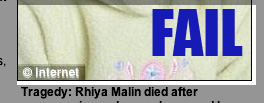
Well, last week the riots prompted media companies to engage in some looting of their own: taking photographs without permission – in breach of several international conventions, as well as the Copyright Designs and Patents Act. This they do every day, and social media has become a cheap import channel. We dinged the Daily Mail recently for its bit of grab-and-run, where the paper attributed a photograph it used without permission to "The Internet".
This is exactly the view you hear from armchair warriors on the cranky fringes of the internet, for whom any assertion of intellectual property rights is theft, a social crime. Ubiquitous message board spammer Crosbie Fitch makes this case: (See Quotes of the Year 2009), the argument being that because something is left in public view, it becomes public property. If only all ownership worked this way, I would have an enviable collection of very expensive sports cars by now...

Well, last week the riots prompted media companies to engage in some looting of their own: taking photographs without permission – in breach of several international conventions, as well as the Copyright Designs and Patents Act. This they do every day, and social media has become a cheap import channel. We dinged the Daily Mail recently for its bit of grab-and-run, where the paper attributed a photograph it used without permission to "The Internet".
Another offender was the BBC, which simply pasted images found on Twitter, and like the Mail, falsely attributed them. This prompted a complaint, which seven days later produced this extraordinary "official response".
"I understand you were unhappy that pictures from Twitter are used on BBC programmes as you feel it may be a breach of copyright," the response began. "Twitter is a social network platform which is available to most people who have a computer and therefore any content on it is not subject to the same copyright laws as it is already in the public domain," it continued. [Our emphasis]This is exactly the view you hear from armchair warriors on the cranky fringes of the internet, for whom any assertion of intellectual property rights is theft, a social crime. Ubiquitous message board spammer Crosbie Fitch makes this case: (See Quotes of the Year 2009), the argument being that because something is left in public view, it becomes public property. If only all ownership worked this way, I would have an enviable collection of very expensive sports cars by now...
Continue reading
Andrew Orlowski @'The Register'

Subscribe to:
Comments (Atom)