Wednesday, 17 August 2011


PythonJones Terry Jones
Well I suppose the Murdochs are going to jail - if the rioters are I guess it's only fair.
♪♫ Yves Montand - Les Feuilles Mortes (Autumn Leaves)
"Autumn Leaves" is a much-recorded popular song. Originally it was a 1945 French song "Les Feuilles mortes" (literally "The Dead Leaves") with music by Joseph Kosma and lyrics by poet Jacques Prévert. Yves Montand (with Irène Joachim) introduced "Les feuilles mortes" in 1946 in the film Les Portes de la Nuit. The American songwriter Johnny Mercer wrote English lyrics in 1947 and Jo Stafford was among the first to perform this version. Autumn Leaves became a pop standard and a jazz standard in both languages, both as an instrumental and with a singer.
Hmmm!
GM Police publish details of riot suspect: his flat gets burnt down
Greater Manchester police have excelled in how NOT too use social media this past week or so...Cameron certainly would be right to ban them from it!

BBC explains 'All your Twitter pics are belong to us' gaffe
Analysis There are some subjects on which giant media companies need to be ultra tippy-toe cautious. When, say, the majority owner of a satellite broadcaster uses its newspapers to lobby for a change the law, we should remember it is not a disinterested party. It may have an agenda. Similarly when the BBC covers copyright, or "net neutrality", it is not a disinterested party either; it is in the BBC's interests to seek changes that lower its costs, and add to its convenience, at the expense of other groups in society. These are political issues in which the BBC is a major player. Corporate responsibility demands that its coverage be squeaky clean.
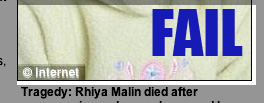
Well, last week the riots prompted media companies to engage in some looting of their own: taking photographs without permission – in breach of several international conventions, as well as the Copyright Designs and Patents Act. This they do every day, and social media has become a cheap import channel. We dinged the Daily Mail recently for its bit of grab-and-run, where the paper attributed a photograph it used without permission to "The Internet".
This is exactly the view you hear from armchair warriors on the cranky fringes of the internet, for whom any assertion of intellectual property rights is theft, a social crime. Ubiquitous message board spammer Crosbie Fitch makes this case: (See Quotes of the Year 2009), the argument being that because something is left in public view, it becomes public property. If only all ownership worked this way, I would have an enviable collection of very expensive sports cars by now...

Well, last week the riots prompted media companies to engage in some looting of their own: taking photographs without permission – in breach of several international conventions, as well as the Copyright Designs and Patents Act. This they do every day, and social media has become a cheap import channel. We dinged the Daily Mail recently for its bit of grab-and-run, where the paper attributed a photograph it used without permission to "The Internet".
Another offender was the BBC, which simply pasted images found on Twitter, and like the Mail, falsely attributed them. This prompted a complaint, which seven days later produced this extraordinary "official response".
"I understand you were unhappy that pictures from Twitter are used on BBC programmes as you feel it may be a breach of copyright," the response began. "Twitter is a social network platform which is available to most people who have a computer and therefore any content on it is not subject to the same copyright laws as it is already in the public domain," it continued. [Our emphasis]This is exactly the view you hear from armchair warriors on the cranky fringes of the internet, for whom any assertion of intellectual property rights is theft, a social crime. Ubiquitous message board spammer Crosbie Fitch makes this case: (See Quotes of the Year 2009), the argument being that because something is left in public view, it becomes public property. If only all ownership worked this way, I would have an enviable collection of very expensive sports cars by now...
Continue reading
Andrew Orlowski @'The Register'


simon_price01 Simon Price
I really, really want to live in some alternate universe where Lieutenant Columbo gets to question James Murdoch.


Australia: Don’t Seize David Hicks’ Assets
The Australian prosecutor’s office should drop the asset-seizing case against former Guantanamo detainee David Hicks for money he earned from a book he wrote about his six years in US custody at Guantanamo Bay, Human Rights Watch said today.
Australian David Hicks was captured in Afghanistan in 2001 and transferred to Guantanamo Bay in January 2002. He was charged in a military commission under a system created by then-President George W. Bush that was later deemed to be unlawful by the US Supreme Court.
Following the enactment of the Military Commissions Act of 2006, Hicks was charged with providing material support for terrorism and faced a possible life sentence. In exchange for a guilty plea, he was offered a sentence of seven years, only nine months of which he would have to actually serve. Hicks pleaded guilty in April 2007.
“A conviction in an unfair and illegitimate system should not be considered proof of a crime,” said Andrea Prasow, senior counterterrorism counsel at Human Rights Watch. “David Hicks alleges years of mistreatment and abuse by US forces and the failure of the Australian government to protect him. He should not be punished for telling that story.”
Hicks’ account of his six years in US custody was published in Guantanamo, My Journey, in late 2010. Proceeds from that publication are the subject of the prosecutor’s seizure and forfeiture action under the Commonwealth Proceeds of Crime Act. The prosecutor is relying on Hicks’ guilty plea, as well as the statement of facts signed by him in connection with the plea, as evidence that he committed an offense under the law of another country.
After his plea, Hicks was returned to his native Australia where he served out the remaining seven months of his sentence in Yatala prison. He was released in December 2007. Included in his plea agreement was a one-year gag rule prohibiting him from discussing his treatment or capture and from profiting from the sale of his story. Following the election of US President Barack Obama, Congress again substantially revised the 2006 Military Commissions Act under which Hicks was prosecuted.
Throughout his detention, Hicks told his lawyers he had been mistreated by US forces in both Afghanistan and Guantanamo by being beaten, made to endure prolonged sleep deprivation, and being forced to take unidentified medication. Former military commissions chief prosecutor Morris Davis testified in other court proceedings that Hicks’ plea agreement was negotiated without his knowledge, suggesting political forces were involved in the agreement.
On August 3, 2011, the New South Wales Supreme Court issued a restraining order on the use of assets derived from the sale of Hicks’ book. The case was adjourned until August 16 to allow the prosecutor to obtain additional evidence, at which time they are expected to ask for seizure of the assets obtained from the publication of the book.
“Although Hicks has alleged years of unlawful and abusive detention, neither the US nor Australia has ever offered him compensation or an apology,” Prasow said. “The prosecutor’s action would just compound that abuse.”
@'Human Rights Watch'
Australian David Hicks was captured in Afghanistan in 2001 and transferred to Guantanamo Bay in January 2002. He was charged in a military commission under a system created by then-President George W. Bush that was later deemed to be unlawful by the US Supreme Court.
Following the enactment of the Military Commissions Act of 2006, Hicks was charged with providing material support for terrorism and faced a possible life sentence. In exchange for a guilty plea, he was offered a sentence of seven years, only nine months of which he would have to actually serve. Hicks pleaded guilty in April 2007.
“A conviction in an unfair and illegitimate system should not be considered proof of a crime,” said Andrea Prasow, senior counterterrorism counsel at Human Rights Watch. “David Hicks alleges years of mistreatment and abuse by US forces and the failure of the Australian government to protect him. He should not be punished for telling that story.”
Hicks’ account of his six years in US custody was published in Guantanamo, My Journey, in late 2010. Proceeds from that publication are the subject of the prosecutor’s seizure and forfeiture action under the Commonwealth Proceeds of Crime Act. The prosecutor is relying on Hicks’ guilty plea, as well as the statement of facts signed by him in connection with the plea, as evidence that he committed an offense under the law of another country.
After his plea, Hicks was returned to his native Australia where he served out the remaining seven months of his sentence in Yatala prison. He was released in December 2007. Included in his plea agreement was a one-year gag rule prohibiting him from discussing his treatment or capture and from profiting from the sale of his story. Following the election of US President Barack Obama, Congress again substantially revised the 2006 Military Commissions Act under which Hicks was prosecuted.
Throughout his detention, Hicks told his lawyers he had been mistreated by US forces in both Afghanistan and Guantanamo by being beaten, made to endure prolonged sleep deprivation, and being forced to take unidentified medication. Former military commissions chief prosecutor Morris Davis testified in other court proceedings that Hicks’ plea agreement was negotiated without his knowledge, suggesting political forces were involved in the agreement.
On August 3, 2011, the New South Wales Supreme Court issued a restraining order on the use of assets derived from the sale of Hicks’ book. The case was adjourned until August 16 to allow the prosecutor to obtain additional evidence, at which time they are expected to ask for seizure of the assets obtained from the publication of the book.
“Although Hicks has alleged years of unlawful and abusive detention, neither the US nor Australia has ever offered him compensation or an apology,” Prasow said. “The prosecutor’s action would just compound that abuse.”
@'Human Rights Watch'

Subscribe to:
Posts (Atom)