Monday, 11 July 2011

For sale: futurologist JG Ballard's old home. In need of modernisation

JG Ballard's rather drab semi-detached home in Shepperton is inextricably linked with the life of one of post-war fiction's greatest talents. Many of the country's best writers, often Ballard's disciples, visited the author during the 49 years that he lived in this sleepy suburb, where he crafted the dystopian thrillers Crash and Cocaine Nights.
Now, Mr Ballard's former partner, Claire Walsh, has told friends the house is finally on the property market following the writer's death in 2009. Estate agent Haart is carrying an advertisement for the property, a "spacious three-bedroom semi-detached house situated just moments from Shepperton High Street" which is "in need of refurbishment". Ballard did little work on it, according to his neighbours. The asking price for this piece of literary history is just under £320,000.
Such a modest sum does not do justice to the life which played out behind its clipped privet hedge. Mr Ballard moved to Old Charlton Road, Shepperton, in 1960, and wrote his first novel, The Wind From Nowhere, two years later, before becoming a full-time writer. His wife died in 1964, leaving him to raise his three children, James, Fay and Bea, on his own.
In the house, he would write longhand between 10am and 1pm in his sitting room, producing around 1,000 words a day. He produced 18 novels in his career. In his later years, visitors to Mr Ballard's house often remarked on how different it was to the apocalyptic scenes seen in his books. In a piece on Ballard in the The Atlantic in December 2009, Christopher Hitchens described Shepperton as "almost laughably tranquil".
Of meeting Ballard at his home, Martin Amis wrote in 2009: "He told me that 'Crash freaks', from, say, the Sorbonne, would visit expecting to find a miasma of lysergic-acid and child abuse. In fact, what they found was a robustly rounded and amazingly cheerful suburbanite."
Also in 2009, the writer Iain Sinclair made a "pilgrimage" to the house. He described a "silver Ford Granada tilted at a drunken angle, like a sinking cabin-cruiser, in the vestigial driveway". Many of the features Sinclair describes can be seen in Haart's advertisement: "a napkin of lawn... the Crittall window of the front room".
There is no "for sale" sign outside the house, which a neighbour said had been empty since Mr Ballard's death. Asked whether she felt the property would attract more interest because of its famous occupant, the neighbour rather pessimistically replied: "I doubt many people will know who he is." 

News of the World final crossword has a message for 'catastrophe' Rebekah Brooks

John Lennon: The Rolling Stone Interview Complete Audio Tapes


AUDIO
Rolling Stone issues # 74 & 75
(21 Jan & 4 Feb, 1971)
John Lennon: The Rolling Stone Interview, Complete Audio Tapes
Interviewed by founding editor Jann S. Wenner
This interview took place in New York City on December 8th 1970, shortly after John and Yoko finished their ‘Plastic Ono Band’ albums in England.
They came to New York to attend to the details of the release of the album, to make some films, and for a private visit.
Via

Sunday, 10 July 2011

A message from a 'wrecker of civilisation':

Chris Carter

Clark Kent's Close Call

Murdoch's malign influence must die with the News of the World

Suddenly, Rupert Murdoch seems much less a global mogul, much more a diminished man of glass. He flies into London this weekend from Sun Valley, Idaho, in time for the last rites of the most successful Sunday newspaper in Britain, the News of the World. One hundred and sixty-eight years ago, it pledged: "Our motto is the truth, our practice is fearless advocacy of the truth." After today, the tabloid will appear no more, felled not by one royal rogue reporter but by the arrogance, ambition and apparent tolerance of systemic criminal behaviour by members of the senior News International management.
The loss of a newspaper, especially one with a proud history of award-winning investigative journalism, is a cause for sadness. The News of the World was the biggest-selling Sunday tabloid in the English-speaking world. The death of a paper in such rude health is unprecedented and unwanted in the media. The individuals who are to blame are, as yet, unwilling fully to admit culpability. Rebekah Brooks, the chief executive, still in post, has warned that worse revelations are to come. The shameful saga stretches back over five years. Arguably, it would not have come to light but for the sterling and stoic persistence of the Guardian, some diligent lawyers and a handful of MPs such as Tom Watson and Chris Bryant.
The News of the World's termination is the price Murdoch is willing to pay to halt the accelerating erosion of the British wing of his international empire and to secure full ownership of "the cash machine", the satellite broadcaster BSkyB, the leading provider of pay TV. However, over the past few days, BSkyB shares have lost more than £1bn in value. A decision on its sale has been postponed until the autumn by Jeremy Hunt, minister for media. Against sound advice, he had previously been minded to approve Murdoch and a £10bn deal which would give him an alarmingly large slice of British media. Now, City experts are warning that the deal could collapse.
On Thursday, Murdoch's son, James, deputy chief operating officer of News Corp, the ultimate owner of News International, which also owns the Times, the Sunday Times and the Sun, possibly opened himself up to criminal charges on both sides of the Atlantic. He admitted he had misled Parliament, although he stated that he did not have the complete picture at the time. He went on to give an extraordinary admission of negligence, describing what he called "repeated wrongdoing that [had] occurred without conscience or legitimate purpose" on his watch. He admitted that, without apparently much questioning, he had signed cheques for £1.7m for two individuals among dozens more celebrities, whose phones have been hacked. Why did the young Murdoch authorise the payments? They paid out £700,000 to the chief executive of the Professional Footballers' Association, Gordon Taylor. One of the conditions was that Taylor didn't speak about the case. News Corp also persuaded the court to seal the file on Taylor's case to prevent all public access, even though, as the Guardian revealed, "it contained prima facie evidence of criminal activity". Did alarm bells not sound for him, that he was having to spend such vast sums of money to keep his company's victims quiet?
One would have expected the company to leave no stone unturned to get to the root of the cancer that had spread across its paper. Instead, it convinced almost everyone, including a toothless Press Complaints Commission (PCC), that it was the work of a "rogue reporter". It was anything but – it was industrial scale hacking of phones.
The senior management at News International were abject in their failure – through lack of insight or enthusiasm – to get to the root of the problem. They failed their victims, they failed their journalists and they failed the News of the World. They may yet be proved to have failed their shareholders.
It is a long road from this to James Murdoch's McTaggart lecture in 2009 at the Edinburgh international television festival. The lecture was titled "The Absence of Trust". He argued: "There is an inescapable conclusion that we must reach if we are to have a better society. The only reliable, durable and perpetual guarantor of independence is profit."
James Murdoch would do well to reflect again on The Absence of Trust. Only closer to home this time. He and other senior management at News International should desist from lecturing the rest of the British media in light of their baleful performance over the phone-hacking affair.
It is therefore only right that Ofcom says that once the current police inquiries are complete, it will consider whether News Corporation, as an organisation, would make a "fit and proper" owner of BSkyB .
As a result, Murdoch may be about to reach an unexpected milestone. Possibly for the first time, his powers have proved no shield against the force of public anger. Thanks to new social media, more than 150,000 people have lodged objections to control of BSkyB passing to Murdoch. In addition, dozens of major advertisers withdrew their contracts from the News of the World. The verdict of many appears to be that News Corp is not fit and proper.
On Friday, David Cameron was heavily criticised for his lack of judgment in giving Andy Coulson a second chance when he appointed him as his director of communications. Cameron opted for a polished mea culpa: "The buck stops here," he said. He indicated that Rebekah Brooks should resign. He also said that the PCC should be axed and reforms to the regulation of the fourth estate initiated. In addition, an investigation into the laxity of the original police and News International inquiry will be conducted. A third inquiry will ask: "How did we – press, politicians and police – get here?"
Undoubtedly, good and honourable journalists exist in abundance, many employed on News International's remaining titles. However, the scale of the News of the World's telephone hacking operation has triggered international disapproval. What appears to be the routine invasion of the privacy of ordinary people already blighted by tragedy is a particularly ruthless and cold-hearted method of harvesting copy.
So what kind of an organisation provides a home for such a culture? Over 40 years, Murdoch convinced the establishment that he can make or break political reputations and grant or take away electoral success. In doing so, he has come close to gelding parliament, damaging the rights of citizens and undermining democracy. It is legitimate to ask how a naturalised American, domiciled in New York, born in Australia, and who pays next to no UK tax, holds so much sway. What right exactly did this man have to exert such influence over our political life? Freedom of information requests reveal that he spoke to prime minister Tony Blair three times in the 10 days that led up to the Iraq invasion in 2003. This was a perversion of our politics, orchestrated by a man whose power the establishment failed to check. Then they had to live with the demeaning consequences.
And what did Britain get in return for gifting this man the back keys to political power? (Literally in Murdoch's case, as he swept into Downing Street days after last year's election and then left by the back door). In return, a swaggering, bullying, crassly ineffective News International treated British citizens with contempt by hacking their phones and treated the media, police and politicians investigating the affair with wilful disdain and barely concealed threats. Let this never happen again on our watch.
Prime ministers have danced fast and furiously to Murdoch's tune. In 2001, for instance, Murdoch's newspapers supported Blair in the general election. Blair in turn backed a communications bill that loosened restrictions on foreign media ownership. More recently, News International bosses are reported to have told Ed Miliband that there would be "repercussions" if he continued to call for Rebekah Brooks's resignation. Miliband, belatedly, has broken out of the cocoon of fear that is Murdoch's speciality. He is on the offensive against the power of Murdoch and that's to his credit. It's hard to conceive that there's any going back.
Abuses of power have certainly occurred around News International. For several years, police failed to notify potential victims of hacking and follow up leads. The police in Surrey appear to have known about the Dowler hacking but did little. Since January, however, the Met's deputy assistant commissioner, Sue Akers, head of Operation Weeting, has been in charge. More arrests are expected. Clearly, the police have much to explain and much to reform. We need a full account of the failure of earlier investigations to unearth the widespread evidence of wrongdoing that is now coming to light.
There are huge challenges ahead, too, for Britain's newspapers. In the 1960s, Hugh Cudlipp of the Daily Mirror dismissed the Press Council as "an exercise in futility". The current PCC has more powers but, ill-equipped as it has proved to be, its bite still seems gummy. It published a woefully poor report into hacking that it subsequently had to withdraw. But before we embrace statutory regulation, with all the danger of political interference that threatens, we must urgently consider radical reforms of the existing regulatory framework: reducing the power of serving editors to stand in judgment of their own work; enhancing the investigative powers of the new body which is properly staffed and funded; and providing sanctions, including the power to levy substantial fines and insist upon prominent retractions of false claims. How this new organisation deals with publishing on the internet is perhaps its first challenge.
It is rumoured that Murdoch intends to launch the Sun on Sunday, possibly in the autumn. That makes it all the more urgent that the lessons of what has happened at the News of the World and on other newspapers are rapidly established.
In the spirit of media plurality, it is essential that Murdoch's control of BSkyB is rejected, as we have argued consistently in these pages. The spectre of the old Murdoch, whose demise was signalled last week – voracious and threatening – must not rise again from the ashes of the News of the World. To comment on this story or any other about phone hacking, please visit our open thread
Editorial
The Observer, Sunday 10 July 2011
@'The Guardian'
Jay Rosen
For those who are asking: Yes, I think News Corp. is a criminal organization and I said so before the current crisis.

U.S. backs Lebanon on maritime border dispute with Israel

RupertMurdochPR
Up to 20 journalists could face jail. That's appalling. Thank God they don't work for me. #DeleteAllYouMongrels

The haunting power of old photographs

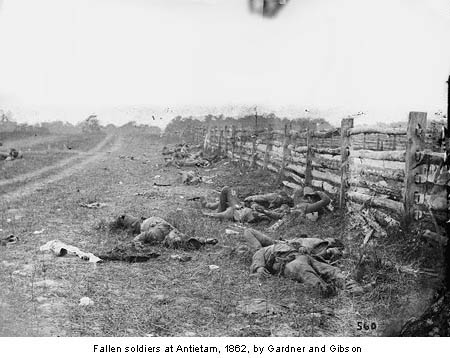
More than just forgotten light ... Confederate soldiers as they fell near the Burnside bridge, Maryland, in 1862. Photograph: Matthew Brady/Alexander Gardner
Old photographs have a compelling power. I am talking about really old photographs, from the early days of the medium in the 19th century. Here is light from more than a hundred years ago caught by a camera; here are the faces of the long dead as they really were: the face of Charles Baudelaire, the face of Oscar Wilde.
But how much meaning can a photograph hold? How much depth is there in these flat renderings of silver and black that happened to be caught on ancient chemically prepared plates and preserved? Inexhaustible meaning and daunting depth, it turns out, when you know how to look and how to show these historic pictures.
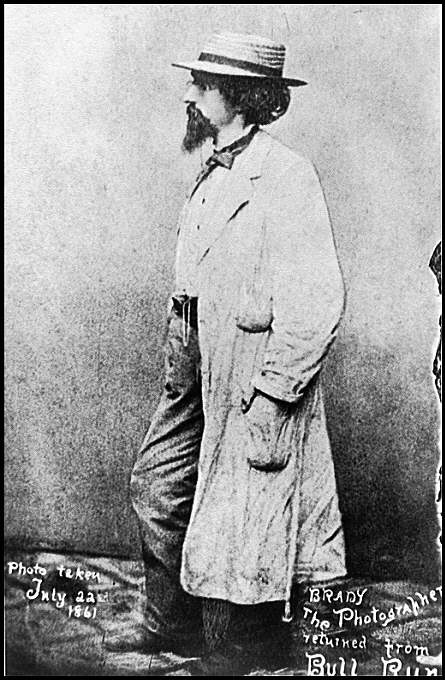
I recently saw, for the first time, Ken Burns's documentary series The American Civil War. It is well known that the American civil war was one of the first wars to be recorded by photographers. Matthew Brady and other photographers followed the armies in wagons that contained their hefty equipment. They photographed the aftermath of slaughter, the twisted bodies lying in fields.
But it takes Burns's extraordinary eye and technical mastery to reveal all that photography can show of the horrific war that ended slavery in America. For one thing, the sheer range of photographs that Burns discovered in the archives defies belief. Thousands of images have been lost, yet he seems to find records of every place, skirmish and character. It is eerie to watch what comes to feel like a contemporary film of the war, a live newsreel of events from long ago. But the reason it is so haunting is that Burns does not just passively film the images, he digs into them, excavates their secrets.
In one visual coup, the film tells us that future general Ulysses S Grant worked in the family store before the war. Impressively, we are shown a photograph of the Grant family business at the time. But then Burns closes in on a detail: a man standing outside, the image enlarged to reveal that we are seeing Grant himself, hanging about in the days when he was a nobody.
The civil war is full of jaw-dropping images. It becomes hallucinatory, a deathly journey into the heart of the battle: you are there. Photographs, this film revealed to me, are not cold relics of forgotten light; they are landscapes that you can explore as if they were three-dimensional spaces. The civil war is still happening, and will continue to happen for as long as these shadowy imprints survive. This is also true of the pictures of our own time. A photograph is a world frozen, that imagination can warm into life.
Jonathan Jones @'The Guardian'

James Murdoch: Why I shut down the News of the World


'...quality of journalism that we (News Corp.) believe in'!!!
What planet does this man live on?
The Sun, The Herald Sun, The NY Daily Post, Fox News etc. I rest my case...

James Murdoch could face criminal charges on both sides of the Atlantic

Carl Bernstein: Murdoch’s Watergate?

One down - three hundred and twenty one to go!

News of the World bids farewell to readers

Rebekah Brooks to be questioned by police over phone hacking

Eh???

 
Sun Politics 
Please ignore last tweet from this account re NotW - not authorised, and not the paper or its political team's opinion. Has been deleted.

And here's the deleted tweet in question...


Sun Politics 
NotW - RIP. A loss to 1st class journalism. Ed Miliband, Guardian & BBC; how proud you must be of your work > Discuss
Danny Baker

'The ******* News of the World team on our last day in the office'

Via
Check the comments :)

My encounter with the News of the World

Jools Payne and son Max

Shropshire public relations consultant Jools Payne saw the workings of the News Of The World first hand last year when her family was touched by tragedy

Spaceboy's classic film re-enactments #1 - Scarface

(Photo:TimN)
NB: No bread rolls were harmed in this remake...

Steve Mason & Dennis Bovell - Yesterday Dub

Former Beta Band man Steve Mason has joined forces with reggae musician and producer Dennis Bovell. The pair have announced the release of an album on 25 July, a radical ‘dub’ reinterpretation of Steve Mason’s Boys Outside‘ LP, which was released last year. A collaborative effort, Ghosts Outside was recorded in early 2011 at Livingston Studios in North London with Dennis Bovell. Using the original tracks as a basis, with Steve’s guidance Dennis added additional instrumentation; the tracks were later given the classic ‘Bovell production’ treatment. Steve met Dennis at a Black History month in Hackney. Dennis is a renowned and much respected artist-producer, central in the development of British reggae from the 1970s onwards. He gained renown with his own group, Matumbi and also worked with the likes of Linton Kwesi JohnsonI-Roy and Janet Kay. He also produced a wide diversity of bands including The Pop GroupOrange Juice and The Slits. He recently featured heavily in the BBC4 Reggae Britannia documentary

For someone XXX

Image and video hosting by TinyPic(Photo:Mona Street)

♪♫ Ash - Walking Barefoot

Gawdamn - bring on global warming is what I say...brrr!
More examples after the jump... 

News Corp would do well not to keep it in the Murdoch family

The chances that Rupert Murdoch would choose to shut a 168-year-old newspaper, a profitable one at that, are nil. The News of the World's closure is a sure sign that the man at the top, known for calling all the shots himself, isn't alone any more.
News Corp is a family-run company – and, more and more, a family imbroglio. Some of the intrigue: Rupert has ceded substantial power to his son James, who made the decision to close the NoW. While James's power is part of a calculated succession plan, he also has his own leverage: he is his father's closest family ally in accommodating Wendi, the patriarch's divisive third wife. His father needs his support.
James has an often tense relationship with his sister, Elisabeth, who has a tense relationship with Wendi. Elisabeth has built her own media company, which her father bought this year, giving her great say within the company. James and Elisabeth's relationship, indeed many of the family relationships, are facilitated by Elisabeth's husband Matthew Freud, the most famous, and most famously slippery, PR man in London. One of Freud's closest friends is Rebekah Brooks, the CEO of News International, who almost everybody believes needs to be fired.
Rebekah, counselled by Matthew, has become James's most dedicated lieutenant. James and Matthew are determined not to fire her (indeed, she is an important instrument in Matthew's business).
As it happens, Wendi doesn't like Rebekah. Rupert, who has described Rebekah as a social climber in his family, can't press for her ousting for fear of siding with Wendi against his children.
Rupert's oldest son, Lachlan, once the presumed heir and now a sullen presence in Australia, fights with his brother and is most closely aligned with his sister Elisabeth. Their older half-sister, Prudence, is aligned with James. Ultimately, they will have four votes between them when it comes to running the company, with no tie-breaking mechanism.
Just as the NoW was a throwback to another era of lawless newsrooms, News Corp is a throwback to an insular and Byzantine family rule, and a them-versus-us relationship to the world. We don't apologise, don't accommodate – we wield our power: that is the Murdochian view. To them, the campaign against the NoW is a campaign by Murdoch's enemies.
The embattled Murdochs – and that is how they see themselves – have denied, stonewalled, stood tough, no matter that virtually every statement they've made about the unfolding scandal has been contradicted by events to come. If there's regret on their part, it's not so much about breaking the law, as it is about giving their enemies a weapon. Shutting the paper down is, they hope, a way to take away that weapon.
James seeks to be his father. He's Rupert without the subtlety – quite something to think about. Even his father was gobsmacked when, during the 2010 general election campaign, James publicly upbraided the editor of the Independent for his paper's coverage of News Corp.
Rupert has watched much of the phone-hacking scandal unfold from afar. And he's been grumpy about it, often complaining to Robert Thompson, the Wall Street Journal editor, about how James has been handling the mess. That's one reason James doesn't much like Thompson or his father's other advisers. He sees himself as his father's adviser, and their advice often leads to his interference. In this he has the support of his siblings, who don't like their father's interference either. (Two of Rupert's key confidantes, his communications chief, Gary Ginsberg, and general counsel, Lon Jacobs, lost their jobs this year in part because they didn't get along with James.)
Recently the Murdochs have started to refer to the hacking scandal as a crisis as serious as News Corp's near-bankruptcy in the early 90s – in family lore one of Rupert's finest moments. That, however, was a crisis resolved by negotiation, cutting deals, and leveraging strength. Rupert is at his best when talking power to power (one reason why the BSkyB deal seems still viable).
But this crisis is about public perception and trust, which is not, to say the least, Rupert's nor his son's métier. Family insiders say it was Freud who suggested closing the paper. He is said to have described it to James as a "Wapping" approach – that is, when Rupert in the dead of night moved his British papers to Wapping to break the print unions.
Closing the NoW may be the first instance of proactive PR strategising during the scandal, but it is probably too little too late. Credibility may be restored, and the public cry for blood sated, only when the company is no longer run by someone named Murdoch.
Michael Wolff @'The Guardian'

Saturday, 9 July 2011

Breaking the Rules

RIAA Starts Going After BitTorrent Sites

Federal government says marijuana has no accepted medical use

Marijuana has been approved by California, many other states and the nation's capital to treat a range of illnesses, but in a decision announced Friday the federal government ruled that it has no accepted medical use and should remain classified as a dangerous drug like heroin.
The decision comes almost nine years after medical marijuana supporters asked the government to reclassify cannabis to take into account a growing body of worldwide research that shows its effectiveness in treating certain diseases, such as glaucoma and multiple sclerosis.
Advocates for the medical use of the drug criticized the ruling but were elated that the Obama administration had finally acted, which allows them to appeal to the federal courts, where they believe they can get a fairer hearing. The decision to deny the request was made by the U.S. Drug Enforcement Administration and comes less than two months after advocates asked the U.S. Court of Appeals to force the administration to respond to their petition.
“We have foiled the government’s strategy of delay, and we can now go head-to-head on the merits, that marijuana really does have therapeutic value,” said Joe Elford, the chief counsel for Americans for Safe Access and the lead counsel on the recently filed lawsuit. Elford said he was not surprised by the decision, which comes just after the Obama administration announced it would not tolerate large-scale commercial marijuana cultivation. “It is clearly motivated by a political decision that is anti-marijuana,” he said. He noted that studies demonstrate pot has beneficial effects, including appetite stimulation for people undergoing chemotherapy. “One of the things people say about marijuana is that it gives you the munchies and the truth is that it does, and for some people that’s a very positive thing.”
DEA Administrator Michele M. Leonhart sent a letter dated June 21 to the organizations that filed a petition for the change. The letter and the documentation that she used to back up her decision were published Friday in the Federal Register. Leonhart said she rejected the request because marijuana “has a high potential for abuse,” “has no currently accepted medical use in treatment in the United States” and “lacks accepted safety for use under medical supervision.”
This is the third time that petitions to reclassify marijuana have been spurned. The first was filed in 1972 and denied 17 years later. The second was filed in 1995 and denied in 2001. Both decisions were appealed, but the courts sided with the federal government.
John Hoeffel @'LA Now'

Paul McMullen admits 'destroying' suicide victim he wrote about & paying police

Ex NOTW journalist Paul McMullan, BBC Radio 4, 2010, repeated, July 2011

Rupert Murdoch, Paper Tiger

Leaky Boat

On the last Sunday of winter in 2001, far off Australia's North West Coast, a fishing boat was sinking. A Norwegian tanker, alerted by Australian Rescue, went to its aid. The Norwegians pulled more than 400 men, women and children out of the little boat. Refugees. The refugees promptly confronted their rescuers and demanded to be taken to Christmas Island or, they told the captain, they would go crazy. As the captain set course for Christmas Island in Australian territory, the Australians radioed. They threatened to seize his ship and throw him in prison if he entered Australian waters. The order had come from the very top: this ship, The Tampa, would not be allowed to land.
That night triggered ten of the most dramatic weeks in our history: the moment that Australia stopped the boats. In one of the most aggressive responses to refugee boats in the world, we sent the major warships of our Navy to confront the boats. Some extraordinary dramas followed: parents were said to have thrown their children overboard, a boat called SIEV X sank taking 353 people to their deaths, refugees wrecked and burnt their boats with deadly results. And as the boats of Muslims came towards us, the Twin Towers came down. It felt like the world would never be the same.
We've rarely felt so strongly about our politics. But we've rarely known so little of what was actually happening. Ten years on, this is the story, told by the men and women who were there. They include John Howard, Philip Ruddock, Peter Reith & Kim Beazley, Navy admirals and sailors, SAS commandos, Afghan farm boys and Iraqi school girls. And there were the pollsters who took careful note of how we responded.
The decision to stop the Tampa was one of the most popular ever taken by any Australian government. So this film is also very much about us -- and the old dance of democracy between the people and our leaders. And its fundamental puzzle -- who is leading and who is following?
A decade later, as we continue to grapple with the scenario of refugee boats arriving, and try to find a way to square the tricky issues of security, compassion and a good orderly migration process, it seems appropriate to lookafresh at the story of 2001.
http://www.abc.net.au/tv/programs/leakyboat.htm

Steve Coogan tears The News Of The World a new areshole


Bonus Hugh Grant video on bugging Paul McMullen after the jump...

Rebekah Brooks speaking to News of the World staff yesterday

Rebekah Brooks addressing staff  courtesy of sky news (mp3)
Rebekah brooks. Extract 2 courtesy of sky news (mp3)
Rebekah Brooks extract 3 courtesy of sky news (mp3)

Murdoch pulls the plug on News of the World

Police investigate suspected deletion of millions of emails by NI executive

♪♫ WordySoulspeak - High All The Time

Belarus Under Siege

On June 29 and 30, US Secretary of State Hillary Clinton was in Vilnius, Lithuania to participate in a meeting of the “Community of Democracies” and to visit one of the many US-funded international “tech camps.” These camps host “civil society” (i.e.opposition) activists from various nations whose governments the US doesn’t appreciate, and teach them internet and social network organizing skills to be used toward fostering, in official words, “democratic transition,” or more correctly, color revolutions and regime change. According to the AP, “Much of the democracy meeting’s opening day dealt with the new mechanics of protest, such as social media networks.” During her visit Clinton stated that “The United States has invested $50 million in supporting internet freedom and we’ve trained more than 5,000 activists worldwide.” This is of course in addition to the hundreds of millions that the US spends in other ways attempting to destabilize its enemies and to force “democratic transitions.”
The choice of Vilnius was not by chance: it lies 30 kilometers from the Belarusian border. This tech camp is hosting 85 activists from the region, “primarily from Belarus.” Belarus is currently being targeted by a concerted effort towards an orange revolution, financed and remote-controlled by the West. Simultaneously, the country is being subjected to a relatively new pressure from the East: certain Russian elements have apparently decided that Belarus and its profitable state-owned enterprises should belong to them, and are contributing in their own way to the effort to destabilize the government.
I’ve just returned to Paris from a second extended trip to Belarus. Western media faithfully relay the monstrous picture of Belarus that our governments want to convey, and so I’d like to report on the situation in this little-known country, and encourage others to visit it in order to experience for themselves the Belarusian culture, economy, hospitality and character. Among other visits I attended an international conference on the resistance to Nazi fascism, in Brest on June 22, the 70th anniversary of the Nazi invasion of the Soviet Union. In a country which lost between a third and a quarter of its population during the war, the memory of the ravages of foreign attacks and the heroism of those who resisted it is very strong and alive. Located dangerously between Europe and Russia, entirely flat and endowed with few natural resources, Belarus has fought hard to build a successful independent state. It is not inclined to lose its sovereignty now...
 Continue reading
Michele Brand @'Counterpunch'


Campaigns, Copyrights, and Compositions: A Politician's Guide to Music on the Campaign Trail

(Click to enlarge)
Via
(Thanx to @exiled surfer)

US government openly admits arming Mexican drug gangs with 30,000 firearms