Saturday, 22 May 2010

Keeper of Secrets

In a very short time, Julian Assange has become one of the most intriguing people in the world. The mysterious Australian founder of the whistleblower website WikiLeaks is as elusive as the public servants, spooks and - he assures me - cabinet ministers who regularly drop their bombshells from the anonymity of his cyberspace bolt-hole.
Of no fixed address, or time zone, Assange has never publicly admitted he is the brains behind the website that has so radically rewritten the rules in the information era. (He acknowledges registering a website, Leaks.org, in 1999, but denies ever having done anything with it.) He has never even admitted his age - although this is not so hard to work out from the parts of his life that journalists have so far been able to piece together.
''Are you 38?'' I ask. He gives an unintelligible response. So that's a yes? ''Something like that.''
Far more tantalising, however, is what he says are some very, very big leaks to come - apparently within weeks. ''Right now we are sitting on history-making stuff,'' he says.
Wikileaks appeared on the internet three years ago. It acts as an electronic dead drop for highly sensitive, or secret information: the pure stuff, in other words, published straight from the secret files to the world. No filters, no rewriting, no spin. Created by an online network of dissidents, journalists, academics, technology experts and mathematicians from various countries, all with similar political views and values apparently, the website also uses technology that makes the original sources of the leaks untraceable.
In April, the website released graphic, classified video footage of an American helicopter gunship firing on - and killing - Iraqis in a Baghdad street in 2007, apparently in cold blood. The de-encrypted video, which WikiLeaks released on its own sites, as well as on YouTube, caused an international uproar.
The Baghdad video has been WikiLeaks' biggest coup to date, although an extraordinary number of unauthorised documents - more than 1 million - have found their way to the website. These include a previously secret 110-page draft report by the international investigators Kroll, revealing allegations of huge corruption in Kenya involving the family of former Kenyan leader Daniel arap Moi; the US government's classified manual of standard operating procedures for Camp Delta, at Guantanamo Bay, which revealed that it was policy to hide some prisoners from the International Committee of the Red Cross; the classified US intelligence report on how to marginalise WikiLeaks; the secret Church Of Scientology manuals; an internal report by the global oil trader Trafigura about dumping toxic waste in the Ivory Coast; a classified US profile of the former Icelandic ambassador to the United States in which the ambassador is praised for helping quell publicity about the CIA's activities involving rendition flights; and the emails leaked from the embattled Climatic Research Unit at East Anglia in Britain, last November, which triggered the so-called ''Climategate'' scandal.
That is one leak that might have bemused conservatives convinced that WikiLeaks is run by ultra-lefties. In the blogosphere, meanwhile, conspiracy theories abound that WikiLeaks is a CIA cyber-ops plot.
Two years ago, a Swiss Bank in Zurich, Julius Baer, succeeded in temporarily closing down the website with a US District Court injunction after WikiLeaks published documents detailing how the bankers hid their wealthy clients' funds in offshore trusts (the banned documents reappeared on WikiLeaks ''mirror'' sites in places such as Belgium and Britain).
The Australian government, too, has made noises about going after WikiLeaks, after the Australian Communications and Media Authority's secret blacklist of banned websites (websites which may be blocked for all Australians if the Rudd government goes ahead with its proposed internet censorship regime), turned up on the website last year. The communications regulator further expanded the blacklist to include several pages on WikiLeaks, whose crime was publishing a leaked document containing Denmark's site of banned websites.
To say that the list of rattled people in high places around the world is growing because of Wikileaks is an understatement. The fact that the website has no headquarters, also means the conventional retaliatory measures - phones tapped, a raid by the authorities - are impossible.
Intense interest in Julian Assange started well before the Baghdad video was released, and viewed 4.8 million times in the first week. The former teenage hacker from Melbourne, whose mystique as an internet subversive, a resourceful loner with no fixed address, travelling constantly between countries with laptop and backpack, constitutes what you might call Assange's romantic appeal. But then there is the flip side: a man who believes in extreme transparency, but evades and obfuscates when it comes to talking about himself in the rare interviews that he gives - which are hardly ever face to face.
The secretiveness extends to those close to him. One woman who speaks to me on the condition of total anonymity, lived in the same share house in Melbourne as Assange, for a few months in early 2007, when WikiLeaks was in its incubation period. The house was the central hub, and it was inhabited by computer geeks.
There were beds everywhere, she says. There was even a bed in the kitchen. This woman slept on a mattress in Assange's room, and says she would sometimes wake up in the middle of the night to find him still glued to his computer. He frequently forgets to eat or sleep, wrote mathematical formulas all over the walls and the doors, and used only red light bulbs in his room - on the basis that early man, if waking suddenly, would see only the gentle light of the campfire, and fall asleep again. He also went through a period of frustration that the human body has to be fed several times a day and experimented with eating just one meal every two days, in order to be more efficient.
''He was always extremely focused,'' she says.
WE MEET in early May, the day after Assange slips back into Melbourne, his home town. He arrived on a flight from Europe, via the United States. Or so I understand from the person acting as our go-between. The same contact provides a Melbourne address, and instructions: ''Don't call a cab, find one on the street; turn off your mobile phone before you catch the cab and preferably, remove the batteries.''
Sitting outside at the rear of the address, I suspect that at the last minute, Assange won't turn up - though not because of the cold. After all, it's well known that he has been spending a lot of time in Iceland lately, advising the Icelandic government on new laws to strengthen freedom of expression and protections for sources and whistleblowers.
Last year, WikiLeaks released a confidential document showing that the major Icelandic bank, Kaupthing, had loaned billions of euros to its major shareholders shortly before the great, global financial meltdown (the website also released the legal threat sent to them by the bank's lawyers).
Suddenly, he is here - a tall, thin, pale figure with that remarkable white hair, looking very tired, and wearing creased, student-style, dark clothes and boots, and backpack.
As we shake hands, he inclines his head slightly in a courtly, old-world manner, at odds with his youthful, student-traveller looks. When I remark that there's a lot to ask him, he replies: ''That's all right - I'm not going to answer half of it.''
Is Assange his real name? Yes, he replies, then says it's the name in his passport. ''What's in a name?'' he then adds mysteriously, casting doubt on his first answer.
(At the time of writing, his passport status was apparently back to normal after immigration officials at Melbourne Airport said that his passport was going to be cancelled on the grounds that it was too tatty).
''It has been in a couple of rivers,'' Assange allows, of the state of his passport. The first time, as he recalls, in December, 2006, when he was crossing a swollen river during heavy rain, in southern Tasmania, and was swept out to sea. He swam back in. ''My conclusion from that experience is that the universe doesn't give a damn about you, so it's a good thing you do.''
Why did he have his passport with him? He had everything he needed for three weeks of survival, he replies. He needed his passport for ID when he flew to Tasmania.
Doesn't he have a driver's licence? ''No comment.'' How true is the image of him as the enigmatic founder of WikiLeaks, constantly on the move, with no real place to call home? Is this really how he lives his life?
''Do I live my life as an enigmatic man?''
No - is it true you're constantly on the move?
''Pretty much true.''
Does he have one base he'd call home?
''I have four bases where I would go if I was sick, which is how I think about where home is.''
He has spent the best part of the past six months in Iceland, he says. And the next six months? ''It depends on which area of the world I'm needed most. We're an international organisation. We deal with international problems,'' he replies.
Assange mentions four bases, but names only two. The one in Iceland, another in Kenya, where he has spent a lot of time, on and off, for the past couple of years. The Kroll report, released on WikiLeaks, reportedly swung the Kenyan presidential election in 2007.
When he's in the country, Assange lives in a compound in Nairobi with other foreigners, mainly members of non-governmental agencies such as Medecins Sans Frontieres. He originally went to Kenya in 2007 to give a lecture on WikiLeaks, when it was up and running.
''And ended up staying there,'' I suggest encouragingly.
''Mmmm.''
As a result of liking the place or …
''Well, it has got extraordinary opportunities for reforms. It had a revolution in the '70s. It has only been a democracy since 2004 … I was introduced to senior people in journalism, in human rights very quickly.''
He has travelled to Siberia. Is there a third base there? ''No comment. I wish. The bear steak is good.''
Why did he go to Georgia?
''How do you know about that?''
I read it somewhere, I reply. It was a rumour. ''Ah, a rumour,'' he says. But he did go there? ''It's better that I don't comment on that, because Georgia is not such a big place.''
Living permanently in a state of exile, means that a person might always have the sharp eye of the outsider, I suggest.
''The sense of perspective that interaction with multiple cultures gives you, I find to be extremely valuable, because it allows you to see the structure of a country with greater clarity, and gives you a sense of mental independence,'' replies Assange.
''You're not swept up in the trivialities of a nation. You can concentrate on the serious matters. Australia is a bit of a political wasteland. That's OK, as long as people recognise that. As long as people recognise that Australia is a suburb of a country called Anglo-Saxon.''
Could he ever live in one place again? A brief silence. ''I don't think so,'' he says finally.
When he isn't being deliberately obscure, and even when he is, Assange has the measured tones of an academic, sometimes sounding, once we're deep in conversation, as if he's giving a lecture. He talks with conviction, with sincerity, without bravado, and wears his ''fame'' lightly.
''I don't see myself as a computer guru,'' he remarks at one point. "I live a broad intellectual life. I'm good at a lot of things, except for spelling.''
It may be unfair to suggest that he likes the dramatic possibilities of his role. Then again, there's no doubting those dramatic possibilities.
At one point, thinking about some of the material leaked on WikiLeaks, I ask him how he defines national security.
''We don't,'' he says crisply. ''We're not interested in that. We're interested in justice. We are a super-national organisation. So we're not interested in national security.''
How does he justify keeping his own life as private as possible, considering that he believes in extreme transparency?
''I don't justify it,'' he says, with just a hint of mischievousness. ''No one has sent us any official documents that were not published previously on me. Should they do so, and they meet our editorial criteria, we will publish them.''
IN 1997, a remarkable book was released about the exploits of an extraordinary group of young Melbourne hackers. It was written by Melbourne academic Suelette Dreyfus, with, says Assange, research assistance from him.
In the book, Underground, all the hackers had monikers. Assange is said to be the character Mendax.
In the book Mendax/Assange was an unusually intelligent child, who never knew his father. His mother, an artist and activist, left home, in Queensland, aged 17, after selling her paintings for enough money to buy a motorbike. In Sydney, she joined the counterculture community, and fell in love with a young man she met at an anti-Vietnam War demonstration - who fathered Mendax. Within a year of his birth, the relationship was over. When Mendax was two, his mother married a fellow artist and actor-director, and the trio travelled from town to town as an on-the-road theatre family. But soon after Mendax turned nine, the couple separated and divorced.
Mendax's mother then started a relationship with a man who Mendax considered to be ''a violent psychopath'', a man with five different identities, who'd fabricated his entire background, including the country of his birth. They eventually fled, and began a life on the run, eventually ending up on the outskirts of Melbourne.
Assange will neither confirm nor deny that he's Mendax. But in an extraordinary slip recently, on SBS's Dateline program, whose reporter, Mark Davis tracked him down in Norway earlier this year (the program screened last Sunday), Assange said that this man ''seemed to be the son of Anne Hamilton-Byrne of the Anne Hamilton-Byrne cult in Australia, and we kept getting tracked down''.
Byrne was the leader of a cult, The Family, discovered in the Dandenong Ranges in the early 1980s. There were 14 children in the cult, who were treated abominably, and taught that they were all Byrne's children. All of them had their hair dyed blonde (the police finally caught up with the cult in 1987).
Assange won't discuss the link with Byrne. He says only: ''My mother was never in a cult. I was never in a cult.''
My question about his own white hair goes nowhere. However, Assange told me when we first talked (we have several conversations), that his hair went white at 15.
''I was very blond until 12-ish, until puberty. I built a cathode ray tube at 15, at school, and connected it backwards. The Geiger counter went 1000, 2000, 3000, 40,000. That was about the time. Also I had some head scans, because I had something like viral encephalitis. It was very mild. I just lost feeling in one cheek. Earlier on, at nine, I'd had head X-rays because I'd headbutted a giant earth ball.''
In yet another intriguing twist, when I ask Assange about a civil rights organisation he helped run in Melbourne, in the early 1990s, and which raised allegations about child neglect in the social welfare system - during Jeff Kennett's time as premier - he says he was particularly concerned with one case. With extreme reluctance, he eventually explains that he knew people whose children had been abused.
He won't talk about this in more detail either. But at a different point in the conversation he says that in the mid-1990s, he got involved helping the Victorian police track down paedophiles. ''That was just consulting on a couple of things,'' he says.
Mendax had lived in a dozen different places in different states, by the time he was 15. Assange mentions that he went to 36 different schools, including correspondence. ''How we know, is that I added them up for my sentencing hearing,'' says Assange. The story gets complicated.
In 1989, computers at NASA, the US space agency, were attacked. The word ''WANK'' appeared in huge letters across the monitor (an acronym for Worms against Nuclear Killers). The culprits have never been found.
But in 1991, Assange, still a teenager, and a key member of a hacker group called the International Subversives, was arrested and charged with more than 30 computer hacking offences. He and others, it was alleged, had hacked the systems of the Australian National University, RMIT, Telecom, and had even monitored the Australian Federal Police investigation into their activities. He eventually pleaded guilty to 24 charges and was placed on a good behaviour bond, and ordered to pay $2100. In Underground, Mendax devises a program called Sycophant, allowing the International Subversives to infiltrate computers at the Pentagon, National Security Agency, Motorola and NASA, among other organisations.
Mendax left home at 17, married his 16-year-old girlfriend, and a year later they had a son. Assange has a son at university.
Mendax's wife left him just after his 20th birthday, leaving him devastated.
Assange, like Mendax, suffered a breakdown and was briefly hospitalised after being charged by police.
He does agree that he had a spell of depression after his relationship broke up. I use the word marriage.
''Are you going to write that I've been married?'' he asks.
It was written about him, I reply - although it was Mendax who was married.
''That may not be true, so you shouldn't write it,'' says Assange.
I ask whether the mother of his son, was his wife. ''Maybe. Maybe not,'' he says, adding, ''I won't speak about my adult personal life.''
Is he currently married? ''No comment.''
His sense of humour flashes when I ask how living rough in the hills and fields outside Melbourne, after he was charged by police with computer crimes, affected him - and the way he thought about life.
''I thought I should buy shares in the internet,'' he quips.
Perhaps he did. Assange isn't paid a salary by WikiLeaks. He has investments, which he won't discuss. But during the 1990s he worked in computer security in Australia and overseas, devised software programs - in 1997 he co-invented ''Rubberhose deniable encryption'', which he describes as a cryptographic system made for human rights workers wanting to protect sensitive data in the field - and also became a central figure in the free software movement.
The whole point of free software, he comments, is to ''liberate it in all senses …'' He adds, ''It' s part of the intellectual heritage of man. True intellectual heritage can't be bound up in intellectual property.''
Did being arrested, and later on finding himself in a courtroom, push him into a completely different reality that he had never thought about - and in a direction that eventually saw him start thinking along the lines of a website like WikiLeaks, that would take on the world?
''That [experience] showed me how the justice system and bureaucracy worked, and did not work; what its abilities were and what its limitations were,'' he replies. ''And justice wasn't something that came out of the justice system. Justice was something that you bring to the justice system. And if you're lucky, or skilled, and you're in a country that isn't too corrupt, you can do that.''
In another life, Assange might have been a mathematician. He spent four years studying maths, mostly at Melbourne University - with stints at the Australian National University in Canberra - but never graduated, disenchanted, he says, with how many of his fellow students were conducting research for the US defence system.
''There are key cases which are just really f---ing obnoxious,'' he says. According to Assange, the US Defence Advance Research Project Agency was funding research that involved optimising the efficiency of a military bulldozer called the Grizzly Plough, which was used in the Iraqi desert during Operation Desert Storm during the 1991 Gulf War.
''It has a problem in that it gets damaged [from] the sand rolling up in front. The application of this bulldozer is to move at 60 kilometres an hour, sweeping barbed wire and so on before it, and get the sand and put it in the trenches where the [Iraqi] troops are, and bury them all alive and then roll over the top. So that's what Melbourne University's applied maths department was doing - studying how to improve the efficiency of the Grizzly Plough. This is beyond the pale.
''The final nail in the coffin was that I went to the hundredth anniversary of physics at the ANU. There were some 1500 visitors there - four Nobel prize winners - and every goddamn one of them was carting around, on their backs, a backpack given to them by the Defence Science Technology Organisation. At least it was an Australian defence science organisation.''
Assange says he did a lot of soul searching before he finally quit his studies in 2007.
He had already started working with other people on a model of WikiLeaks by early 2006. There were people at the physics conference, he goes on, who were career physicists, ''and there was just something about their attire, and the way they moved their bodies, and of course the bags on their backs didn't help much either. I couldn't respect them as men.''
His university experience didn't define his cynicism, though. Assange says that he's extremely cynical anyway.
''I painted every corner, floor, wall and ceiling in the 'room' I was in, black, until there was only one corner left. I mean intellectually,'' he adds. ''To me, it was the forced move [in chess], when you have to do something or you'll lose the game.''
So WikiLeaks was his forced move?
''That's the way it feels to me, yes.''
So who leaks to Wikileaks?
Assange says that intelligence agencies will never confirm or deny that they ''post'' documents, even when some of those documents display the letterhead of the intelligence organisation involved.
''I love classification labels, because if it says Top Secret on the front, I think 'this is probably an interesting document,' and legitimate,'' he says. ''There's a glut of information of low quality in the world. So information that has been restricted and suppressed - it's interesting that people have [spent] economic effort to restrict and suppress it - so info which has extra restrictions on it, usually has an extra ability to induce reforms if it's released.
''Intelligence organisations nearly always put what section it's from, and the classification label. Sometimes they'll use code words in the classification. They'll even classify the classification.''
It's curious, surely, given the Pentagon's anger over the leaking of the Baghdad video, that Assange hasn't been asked to come into some office, somewhere, and have a chat. He returned to Australia via the US with no trouble, I point out.
''I believe that there's an understanding that we have a lot of support within these organisations, and interference with us runs the risk of being exposed internally, and would likely be exposed by us,'' he replies.
It's also curious that he hasn't been approached to work for any of the security agencies for ''the greater good''.
WikiLeaks is for the greater good, he says.
THE individual who sent WikiLeaks the Baghdad video remains invisible. WikiLeaks released two versions of the video - a longer version, and a shorter one - which has also caused much controversy. Twenty minutes was said to be missing from the longer version. It was like that when they received the footage, says Assange, and they were very careful to make as few edits as possible to the 18-minute version they released.
''In particular the first 11 minutes is one continuous take. And then there's only cuts for time, and only about three cuts. The first 13 minutes is when all the action happens.''
Why did WikiLeaks put a copyright symbol on the footage they released?
''We didn't have time to sort out copyright - about how all that should be managed,'' he replies.
''We had some ideas, but we were quite concerned about people taking material and misrepresenting it.''
As the list of rattled people in high places gets longer, Assange and his team have become used to an increased level of interest from the authorities - and security services, leaked documents from some of those services notwithstanding.
There are other security concerns as well. Two human rights lawyers who had been helping WikiLeaks were shot dead in their car on a Nairobi street last year. Assange himself has written an online article about increased surveillance activities, ''most of which appears to be the results of US 'interests' ''.
In an email he sent out to journalists earlier this year, Assange wrote: ''We have had to spread assets, encrypt everything and move telecommunications and people around the world to activate protective laws in different national jurisdictions.''
In 2008, Islamic militants threatened WikiLeaks after the website ''mirrored'' a video of Dutch parliamentarian Geert Wilders' controversial view of Islam in his 17-minute film, Fitna. A trailer of the film had been uploaded to several video-sharing sites, including YouTube, causing fury in Muslim nations. Pakistan's government ordered the nation's internet service provider to block YouTube's sites, which caused YouTube to be blocked in other countries as well. YouTube removed the trailer and access was restored.
Another website that hosted the trailer also removed it, saying the lives of its staff had been put at risk. WikiLeaks then mirrored the video, and got so much traffic that the site had to be temporarily taken off line.
''We republished the material because it had been censored because of the threat of violence. Then we received threats of violence [via] emails,'' says Assange.
''We didn't believe them to be credible threats in the sense that we have good physical security in the sense of our internet infrastructure, secret locations and our personnel. That technology is geared at dealing with spy agencies. Islamic militants don't have the capacity to get past those defences.''
He adds that his team has also received threats from US military militants - ''I deliberately use that word'' - which they had not found credible either. ''I did not feel that it was possible for them to carry out the threats.''
WikiLeaks, he maintains, has released more classified documents than the rest of the world press combined. "That shows you the parlous state of the rest of the media. How is it that a team of five people [WikiLeaks is run by five full-time ''staffers'' and almost 1000 volunteers] has managed to release to the public more suppressed information, at that level, than the rest of the world press combined? It's disgraceful.
''They don't want to give [out] any information unless it's going to sell more newspapers. The result is the public record is denied primary sources.''
He would like to see all media develop their own forms of WikiLeaks. That would point his own website out of business, I point out.
''We have a proposal to [an American foundation] for a grant to do just that,'' he replies.
Niki Barrowclough @'The Age'

Toots and the Maytals - Sweet & Dandy

'A Monstrous Disgrace' - Mona's final verdict

Friday, 21 May 2010

I love TedTalks...(and so should you)

 Carolyn out there in the netosphere has come up with a list of talks that she thinks are of particular interest.
Do yourself a favour and check them out

MONA MOHAWK - by Winston Smith


how's this little one regards.

UNKLE


Still one of my fave vids of all time...

China sentences professor for organizing group sex parties

Advertisment

Thursday, 20 May 2010

The advantages of autism

Michelle Dawson can't handle crowded bus journeys, and she struggles to order a cup of coffee in a restaurant because contact with strangers makes her feel panicky. Yet over the past few years, Dawson has been making a name for herself as a researcher at the Rivière-des-Prairies hospital, part of the University of Montreal in Canada.
Dawson's field of research is the cognitive abilities of people with autism - people such as herself. She is one of a cadre of scientists who say that current definitions of this condition rely on findings that are outdated, if not downright misleading, and that the nature of autism has been fundamentally misunderstood for the past 70 years.
Medical textbooks tell us that autism is a developmental disability diagnosed by a classic "triad of impairments": in communication, imagination and social interaction. While the condition varies in severity, about three-quarters of people with autism are classed, in the official language of psychiatrists, as mentally retarded.
Over the past decade or so, a growing autistic pride movement has been pushing the idea that people with autism aren't disabled, they just think differently to "neurotypicals". Now, research by Dawson and others has carried this concept a step further. They say that auties, as some people with autism call themselves, don't merely think differently: in certain ways they think better. Call it the autie advantage.
How can a group of people who are generally seen as disabled actually have cognitive advantages? For a start, research is challenging the original studies that apparently demonstrated the low IQ of people with autism. Other studies are revealing the breadth of their cognitive strengths, ranging from attention to detail and sensitivity to musical pitch to better memory.
More recently, brain imaging is elucidating what neurological differences might lie behind these strengths. Entrepreneurs have even started trying to harness autistic people's talents (see "Nice work if you can get it"). "Scientists working in autism always reported abilities as anecdotes, but they were rarely the focus of research," says Isabelle Soulières, a neuropsychologist at Harvard Medical School in Boston, who works with Dawson. "Now they're beginning to develop interest in those strengths to help us understand autism."
The fact that some people with autism have certain talents is hardly a revelation. Leo Kanner, the psychiatrist who first described autism in the early 1940s, noted that some of his patients had what he termed "islets of ability", in areas such as memory, drawing and puzzles. But Kanner's emphasis, like that of most people since, was on autism's drawbacks.
Today it is recognised that autism varies widely in terms of which traits are present and how prominently they manifest themselves. The cause remains mysterious, although evidence is pointing towards many genes playing a role, possibly in concert with factors affecting development in the womb.
A single, elegant explanation capturing all that is different about the autistic mind has so far proved elusive, but several ideas have been put forward that attempt to explain the most notable traits. Perhaps one of the best known is the idea that autistic people lack theory of mind - the understanding that other people can have different beliefs to yourself, or to reality. This account would explain why many autistic people do not tell lies and cannot comprehend those told by others, although the supporting evidence behind this theory has come under fire lately.

Verbal cues

People with autism are also said to have weak central coherence - the ability to synthesise an array of information, such as verbal and gestural cues in conversation. In other words, sometimes they can't see the wood for the trees.
The idea of the autistic savant, with prodigious, sometimes jaw-dropping, talents has taken hold in popular culture. Yet savants are the exception, not the rule. The usual figure cited is that about 1 in 10 people with autism have some kind of savant-like ability. That includes many individuals with esoteric skills that are of little use in everyday life - like being able to instantly reckon the day of the week for any past or future date.
The reality is that children with autism generally take longer to hit milestones such as talking and becoming toilet-trained, and as adults commonly struggle to fit into society. Only 15 per cent of autistic adults have a paying job in the UK, according to government figures. The mainstream medical view of autism is that it represents a form of developmental brain damage. But what if that view is missing something?
The first way in which Dawson challenged the mainstream view was to address the association between autism and low IQ. In 2007, Dawson and Laurent Mottron, head of the autism research programme at the University of Montreal, published a study showing that an autistic person's IQ score depends on which kind of test is used. With the most common test, the Weschsler Intelligence Scale, three-quarters of people with autism score 70 or lower, which classifies them as mentally retarded, as defined by the World Health Organization's International Classification of Diseases. But when the team administered a different, yet equally valid, IQ test known as the Raven's Progressive Matrices, which places less weight on social knowledge, most people with autism scored at a level that lifted them out of this range (Psychological Science, vol 18, p 657).
Dawson believes her personal connection to this field of inquiry gives her unique insights. Recently, she began wondering if autistic strengths might already have surfaced in research settings, only to be buried in a literature dominated by the view of autistic people as damaged goods. "No one had ever thought to ask: What cognitive strengths have been reported in the literature?" she says.
After reviewing thousands of papers and re-examining the data, Dawson says she has found dozens that include empirical evidence of autistic strengths that are cloaked by a preoccupation with deficits.
Take, for example, a 2004 study where autistic and non-autistic people did sentence comprehension tests while lying in a brain scanner (Brain, vol 127, p 1811). The autistic volunteers showed less synchronicity between the different language areas of the brain as they performed the task. The authors speculate that this could explain some of the language problems seen in autism. Yet according to the results section, the autistic group did better at this particular comprehension task than the control group. "The researchers use the higher performance in one area to speculate about deficit elsewhere," says Dawson.

Attention to detail

Evidence for autistic advantages is also coming in from new studies. One strength derives from an aspect of autism that has long been seen as one of its chief deficits: weak central coherence. The flip side of an inability to see the wood for the trees is being very, very good at seeing trees.
Psychologists investigate the ability to aggregate or tease apart information by showing volunteers drawings of objects such as a house, and asking them to identify the shapes embedded within it, like triangles and rectangles. Numerous studies have shown that people with autism can do these tasks faster and more accurately. And that's not just with pictures; autistic people also do it with music, in tasks such as identifying individual notes within chords.
Maretha de Jonge, a child psychiatrist at the University Medical Centre in Utrecht, the Netherlands, who has done such studies, explains that "weak" in the context of central coherence doesn't have to mean inferior in daily life. "Weakness in integration is sometimes an asset," she says. It can be useful to filter out external stimuli if you are writing an email in a noisy coffee shop, for example, or are searching for a camouflaged insect in a rainforest. Recasting weak central coherence as attention to detail and resistance to distraction suggests a mode of thought that could have advantages.
Other autistic strengths are harder to paint as disabilities in any way. For example, Pamela Heaton of Goldsmiths, University of London, has shown that people with autism have better musical pitch recognition.
On the visual side, a few autistic savants who are immensely talented artists are well known, but recent studies suggest superior visuospatial skills may be more common in autism than previously supposed. Autistic people are better at three-dimensional drawing, for example, and tasks such as assembling designs out of blocks printed with different patterns (Journal of Autism and Developmental Disorders, vol 39, p 1039).
Brain scans indicate that this may be because people with autism recruit more firepower from the brain's visual areas when doing such tasks. They may even use their visual areas for other thought processes. Mottron's team found that people with autism were completing the reasoning tasks in the Raven's IQ test by using what is usually regarded as the visual part of the brain, along with more typical intelligence networks (Human Brain Mapping, vol 30, p 4082).
Many researchers note that people with autism seem hypersensitive to sights and sounds. In 2007, based partly on this finding, Kamila Markram and Henry Markram and Tania Rinaldi of the Swiss Federal Institute of Technology in Lausanne set out a theory of autism dubbed the "intense world syndrome" (Frontiers in Neuroscience, vol 1, p 77). According to this, autism is caused by a hyperactive brain that makes everyday sensory experiences overwhelming.
One of their planks of evidence is autopsy findings of structural differences in the brain's cortex, or outer layer. People with autism have smaller minicolumns - clusters of around 100 neurons that some researchers think act as the brain's basic processing units - but they also have more of them. While some have linked this trait to superior functioning, the Lausanne team still framed their theory as explaining autism's disabilities and deficits.
Mottron's team has published an alternative theory of autism that they believe more fully and accurately incorporates autistic strengths. Their "enhanced perceptual function model" suggests autistic brains are wired differently, but not necessarily because they are damaged (Journal of Autism and Developmental Disorders, vol 36, p 27). "These findings open a new educational perspective on autism that can be compared to sign language for deaf people," says Mottron.
While Henry Markram maintains that autism involves a "core neuropathology", he told New Scientist that the intense world idea and Mottron's theory are "aligned in most aspects". "Of course the brain is different, but to say whether the brain is damaged or not depends on what you mean by damaged."
What other cognitive abilities make up the autistic advantage? More rational decision-making seems to be one - people with autism are less susceptible to subjective or emotional factors such as how a question is worded (New Scientist, 18 October 2008, p 16). Still, until the idea of the autie advantage gains ground, the full range of autistic strengths will remain unknown.
Yet the idea seems to be taking root. When speaking at the TED conference in Long Beach, California, in February, professor of animal science Temple Grandin, who has autism, was cheered after quipping that Silicon Valley wouldn't exist without the condition. She also claimed the tech-heavy crowd was probably stacked with "autism genetics".

Galling message

Perhaps it will prove impossible to draw all-encompassing conclusions about the advantages and disadvantages of a condition described as a spectrum. Autism includes brilliant engineers, music prodigies who can't unload a dishwasher, maths savants who can't speak, and other combinations of talent and disability.
It is important to note, however, that the concept of the autie advantage has not been universally welcomed. A number of researchers, as well as parents of autistic people, are leery of too much emphasis on autistic strengths. They fear it could lead society to underestimate some people's impairments and the difficulties they face.
That outcome could threaten funding for badly needed social services and therapy programmes. As one researcher who did not want to be identified put it: "Michelle Dawson's first-hand experience is valuable. But her experience doesn't necessarily map onto other people's."
For a parent struggling with a child who cannot feed or use the toilet themselves it must be galling to hear that the condition may be advantageous. Yet other parents may be equally fed up of hearing uniformly negative messages about their children's potential. Perhaps only by considering the advantages of autism as well as its disadvantages can those affected reap better opportunities in life.
As far as Dawson is concerned, what matters most is evidence. Last year, at an autism conference, she presented a poster on her work. "When people looked at my results, they said, 'It's so good to see something positive!' I said that I don't see it as positive or negative. I see it as accurate."

Nice work if you can get it

Thorkil Sonne, founder of the IT firm Specialisterne in Copenhagen, Denmark, has led private-sector efforts to capitalise on autistic strengths, such as memory and attention to detail. His company employs 48 people, 38 of whom have autism.
After receiving training, employees work as IT consultants to other firms. Sonne, a former IT consultant himself, founded the company in 2004, soon after his son was diagnosed with autism. "I am just a father who reacted in despair by establishing a company tailored to meet the working conditions of people with autism," he says.
Specialisterne is no charity, though. The company turns a healthy profit - £120,000 in 2008 - and branches will soon open in the UK, Iceland and Germany. In Chicago, a non-profit start-up called Aspiritech is based on Sonne's model.
Michelle Dawson, an autistic cognition researcher at the University of Montreal, Canada, who has the condition herself, is hopeful that such enterprises will improve public attitudes and career opportunities for people with autism. Yet she cautions against pigeonholing people: "Asking what kind of job is good for an autistic is like asking what kind of job is good for a woman," she says.
Sonne says it is not his intention to stereotype autistic people as data-entry drones. The IT connection is because that's where his experience lay, but he's already ramping up the operation to cater to individual preferences and talents. He recently established an education programme for adolescents with autism, and hired a music and art teacher. Sonne says: "Our ambition is to work out a model in which people who struggle with traditional expectations of social skills can excel."
David Wolman @'Life'

Mandyville

HA!

Facebook exodus on the cards as watchdog swoops in

Facebook users are already deleting their accounts over recent privacy snafus as the Australian privacy watchdog steps in to ensure users are not being forced to share private information against their will.
The social networking site has promised to make significant changes to simplify its privacy settings in the coming weeks to avoid a mass exodus from the site.
The concerns from Australian Privacy Commissioner Karen Curtis follow similar warnings sounded by US senators, the European Union and various lobby groups.
They come as several online tools have sprung up to highlight the social networking site's privacy threats. Many users do not know that much of their profile is now public by default.
Youropenbook.org lets people search through status updates of all Facebook users who have not made their profiles private. Reclaimprivacy.org scans your privacy settings and tells you which information is public, while SaveFace can automatically lock user profiles down to the most secure settings.
A recent poll by Sophos of 1588 Facebook users found 60 per cent were considering deleting their Facebook profiles over recent changes seen as forcing its 500 million users into sharing more of their personal information publicly and with other websites.
Of those surveyed, 16 per cent claimed they had already stopped using Facebook as a result of inadequate control over their data. The phrase "delete Facebook account" has become a hot search term on Google and several campaigns have started, including "Quit Facebook Day".
One of the most high profile Facebook quitters is internet entrepreneur Jason Calacanis, who said Facebook had abused users' trust time and time again.
"Facebook is a Ponzi scheme run by a very bad actor," the founder of the Mahalo.com search engine wrote. "The best way to express our discontent with [founder] Mark Zuckerberg is to simply walk away."
Curtis said her office would be "discussing privacy concerns with Facebook over the coming days and we will be asking them to answer a range of questions that we have".
"My office does not support any business practice that forces an individual to share personal information publicly against their will," she said.
"I note that individuals seeking to create a Facebook account are advised that certain limited information will be publicly available."
Sophos senior technology consultant Graham Cluley said most people still did not know how to set their Facebook privacy options safely, finding the whole system confusing.
"What's needed is a fundamental shift towards asking users to 'opt-in' to sharing information, rather than to 'opt-out'," Cluley said.
"People use Facebook to share private information and are unlikely to want their holiday snaps or new mobile number accidentally popping up all over the internet."
Highlighting the privacy implications of recent changes, a Facebook user commenting on a previous story on this website said they found their Facebook profile image and name on the People magazine website after simply reading an article on the site.
"Imagine my horror to see my name and the picture I have on Facebook for all to see," the reader wrote.
"Bear in mind, I hadn't made a comment just read the article ... I was also classed as having liked the article."
Deliberate changes aside, Facebook has also faced a privacy backlash over several security flaws that inadvertently exposed private information and chat messages. There have been a string of similar privacy debacles since the site's launch, as collated by CNET News.
Facebook has admitted it has done a poor job of communicating to users the implications of recent changes and that its privacy settings have become too complex. The current privacy policy has 50 different settings and 170 options.
The site's cause was not helped by leaked chat logs from founder Mark Zuckerberg's Harvard days which showed the then 19-year-old calling users who trusted them with his information "dumb f---s".
In a radio interview this week the site's chief of public policy, Tim Sparapani, said simpler privacy settings were on the way.
"We are going to be providing options for users who want simplistic bands of privacy that they can choose from and I think we will see that in the next couple of weeks,” Sparapani said.
It is unclear where users who have already pledged to delete their Facebook accounts will go. MySpace, which has suffered significant traffic falls as a result of Facebook's soaring popularity, sought to take advantage of its chief competitor's woes this week by announcing its own privacy changes.
MySpace says it will roll out a "simplified" version of its privacy settings in the next few weeks. The new system will be a single slider that can be set to "public", "friends only" or "public to users over the age of 18".
Asher Moses @'The Age'

There are some good links above to scan your Facebook profile to see exactly what your settings are. I have to say that FB has allowed me to get in touch with old friends (some that I have been out of contact with for 25 years) as well as meet some great new people but unless they get their act together re these privacy issues I will be going elsewhere!

Facebook mulls U-turn on privacy

♪♫ The Rolling Stones - Following The River

Oh! Oh! Oh! Me want!

4 million gallons a day!

The latest video footage of the leaking Deepwater Horizon oil spill in the Gulf of Mexico show that oil is escaping at the rate of 95,000 barrels — 4 million gallons — a day, nearly 20 times greater than the 5,000 barrel a day estimate BP and government scientists have been citing for nearly three weeks, an engineering professor told a congressional hearing Wednesday.
The figure of 5,000 barrels a day or 210,000 gallons that BP and the federal government have been using for weeks is based on satellite observations of the surface. But NASA’s best satellite-based instruments can’t see deep into the waters of the Gulf, where much of the oil from the gusher 5,000 feet below the surface seems to be floating.
Federal officials testified in hearings on Tuesday that they were putting together a crack team to get to the bottom of big the spill really is. That effort comes a month after the April 20 explosion that triggered the unprecedented oil spill in deep waters of the United States. Experts say knowing that amount is crucial for efforts to cap the broken wellhead and to monitor and clean up the oil.
Steve Wereley, an associate professor of mechanical engineering at Purdue University, earlier this month made simple calculations from a video BP released on May 12 and came up with a flow of 70,000 barrels a day, NPR reported last week. Werely on Wednesday told a House Commerce and Energy Committee subcommittee that his calculations of two leaks that show up on videos BP released on Tuesday showed 70,000 barrels from one leak and 25,000 from the other.
He said the calculation could be off by 20 percent — meaning the spill could range from between 76,000 to 104,000 barrels a day. But Wereley said he would need to see videos that were not compressed and showed the flow over a longer period so that it would be possible to get a better calculation of the mix of oil and gas from the wellhead.
Rep. Ed Markey, D-Mass., who chaired the hearing, promised to get that information from BP and make it possible for other scientists to use other methods to get a more accurate calculation of the size of the spill.
“The true extent of this spill remains a mystery,” Markey said. He said the BP had said that the flow rate was not relevant to the cleanup effort. “This faulty logic that BP is using is … raising concerns that they are h iding the full extent of the damage of this leak.
Renee Schoof @'McClatchy'

Ids podcast 4 by cjfitz


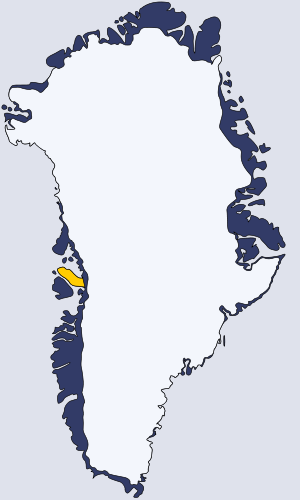
Greenland soon to rejoin highest peaks of the world!

Thanks, global warming!

Greenland is situated in the Atlantic Ocean to the northeast of Canada. It has stunning fjords on its rocky coast formed by moving glaciers, and a dense icecap up to 2 km thick that covers much of the island--pressing down the land beneath and lowering its elevation. Now, scientists at the University of Miami say Greenland's ice is melting so quickly that the land underneath is rising at an accelerated pace.
According to the study, some coastal areas are going up by nearly one inch per year and if current trends continue, that number could accelerate to as much as two inches per year by 2025, explains Tim Dixon, professor of geophysics at the University of Miami Rosenstiel School of Marine and Atmospheric Science (RSMAS) and principal investigator of the study.
"It's been known for several years that climate change is contributing to the melting of Greenland's ice sheet," Dixon says. "What's surprising, and a bit worrisome, is that the ice is melting so fast that we can actually see the land uplift in response," he says. "Even more surprising, the rise seems to be accelerating, implying that melting is accelerating." 

Do me a favour Wenlock & Mandeville - Fugoff right now!

Bloody Olympic mascots!

Marijuana Fuels a New Kitchen Culture


Even preschool teachers unwind with a round of drinks now and then. But in professional kitchens, where the hours are long, the pace intense and the goal is to deliver pleasure, the need to blow off steam has long involved substances that are mind-altering and, often enough, illegal.
“Everybody smokes dope after work,” said Anthony Bourdain, the author and chef who made his name chronicling drugs and debauchery in professional kitchens. “People you would never imagine.”
So while it should not come as a surprise that some chefs get high, it’s less often noted that drug use in the kitchen can change the experience in the dining room.
In the 1980s, cocaine helped fuel the frenetic open kitchens and boisterous dining rooms that were the incubators of celebrity chef culture. Today, a small but influential band of cooks says both their chin-dripping, carbohydrate-heavy food and the accessible, feel-good mood in their dining rooms are influenced by the kind of herb that can get people arrested.
Call it haute stoner cuisine.
“There has been an entire strata of restaurants created by chefs to feed other chefs,” Mr. Bourdain said. “These are restaurants created specially for the tastes of the slightly stoned, slightly drunk chef after work.”
As examples of places serving that kind of food, he offered some of David Chang’s restaurants; Au Pied de Cochon in Montreal, with its poutine of foie gras; Crif Dogs in the East Village, which makes a deep-fried cheese steak hot dog; and, in fact, the entire genre of mutant-hot-dog stands.
To be sure, substance abuse and addiction are concerns in the restaurant industry, and any restaurant where an employee or owner is caught with illegal drugs could lose its liquor license.
It is also hard to imagine any ambitious kitchen could function safely during dinner rush if the staff were impaired.
And despite what Mr. Bourdain said, a great many cooks get along just fine with no chemical assistance at all.
Nevertheless, a handful of chefs are unabashedly open about marijuana’s role in their creative and recreational lives and its effect on their restaurants.
The chefs and restaurateurs Frank Falcinelli and Frank Castronovo said most of their projects — going to Sicily to import olive oil to sell at their two Frankies Spuntino restaurants; the concept for their Brooklyn restaurant Prime Meats; even a new restaurant planned for Portland, Ore. — were conceived with the creative help of marijuana.
Roy Choi, who owns the fleet of Kogi Korean taco trucks in Los Angeles, likens the culinary culture that has grown up around marijuana to the one that rose up around the Grateful Dead years ago. Then, people who attended the band’s shows got high and shared live music. Now, people get high and share delicious, inventive and accessible food.
“It’s good music, maybe a little weed and really good times and great food that makes you feel good,” he said.
“We’re not like Cypress Hill,” Mr. Choi said, referring to a rap group known for being outspoken advocates of pot use. “It’s not like a campaign to make food out of hemp, but it is a culture. It’s a vibe we have.”
Mr. Choi, who recently opened his first restaurant, Chego!, said he uses marijuana to keep his creativity up and to squeeze in quick breaks in the midst of 17-hour workdays.
“In the middle of a busy day, I’ll smoke,” he said. “Then I’ll go to the record store and hang out and clear my mind or pop into a matinee movie and then come back to the streets.”
Getting in touch with the haute stoner food aesthetic, though, does not necessarily mean looking at life through a haze of smoke.
The cereal milk soft-serve ice cream at Momofuku Milk Bar in Manhattan is a perfect example. A dessert based on the slightly sweet flavor of milk at the bottom of a cereal bowl particularly appeals to someone who knows both high-quality food and the cannabis-induced pleasure of a munchie session built from a late-night run to the 7-Eleven.
Christina Tosi, the pastry chef of David Chang’s empire, said she was stone-cold sober when she invented it. She was in the basement of Mr. Chang’s Ssam Bar late at night, trying to save a failed experiment in fried apple pies.
“I promise you there was no marijuana involved,” she said. “It would have made the stress of it more bearable if it was.”
Mr. Chang said drugs will always be part of kitchen culture, but that marijuana alone did not explain the changes in the culinary landscape that his restaurants represent.
“I don’t know what happened,” he said. “But it certainly wasn’t calculated. We wanted to serve great food at an affordable price. That’s it.”
Patty Scull, who lives in the East Village, recently spent part of an evening at Momofuku Milk Bar spooning up cinnamon-bun cereal milk soft-serve with chocolate fudge topping.
“It’s so random that it’s something you would eat if you were totally baked,” she said. (For the record, she said she wasn’t.)
Ms. Tosi defines haute stoner cuisine as the kind of food that tastes good in the altered state marijuana brings.
“You like to eat stuff with texture and that is really deep in flavors,” said Ms. Tosi, who acknowledged the stoner appeal of her creations. “You want the ultimate sensory experience.”
Even for people who don’t use illegal drugs, the deep flavors and sensory appeal of dishes like the breakfast burrito pizza at Roberta’s in Bushwick, Brooklyn, have an undeniable appeal. They plug directly into the reptilian portion of our brains, the side that wants what it wants and wants it now — and also a big bowl of it, please.
“I always call it the Big Mac effect,” said the chef Vinny Dotolo, who owns Animal in Los Angeles with Jon Shook. Mr. Shook’s version of the French-Canadian dish poutine, built from Cheddar cheese and French fries covered in oxtail gravy, might be considered for the haute stoner food hall of fame.
The McDonald’s sandwich is familiar and offers a range of tastes, Mr. Dotolo said. There are savory elements from the cheese and beef, sweetness from the sauce, tartness from the pickle and crunch from the lettuce, all surrounded by soft white bread.
“It’s that thing where you’re trying to hit all the senses,” he said.
If you are still skeptical, check out a Web-based show called “Munchies” (www.vbs.tv/watch/munchies), which follows chefs as they party and eat late into the night, then head back to their kitchens to cook. Billows of smoke and doobie references abound. Although the show can be cagey about who is doing the smoking, featured chefs have included the men from Animal, Mr. Chang and the Franks — Mr. Falcinelli and Mr. Castronovo.
Joanne Weir, a San Francisco cooking teacher and television personality who went to Woodstock at age 15, said that there is a difference between this period in stoner cuisine and the cooking of the hippie movement. “It’s people’s pursuit of the best ingredients,” she said.
Chefs who smoke say that includes the marijuana itself.
“The quality of marijuana you’re getting, just like the quality of booze you’re getting and the quality of food you’re getting, is better,” Mr. Falcinelli said.
Although marijuana has long been a part of restaurant culture, its current prominence results, he said, from “a triple coincidence.”
More states are legalizing marijuana or offering medical marijuana plans, so there is more and better pot in circulation, Mr. Falcinelli and other chefs said. At the same time, diners are wild about high-end snacking: witness the rise of food carts and the elevation of humble dishes like pizza, hamburgers and pork buns.
The chefs of the haute stoner cuisine movement are just as obsessive about their marijuana as they are about olive oil, wine or coffee.
“It’s like getting the best cheese,” Mr. Falcinelli said. “I have like four or five different types of marijuana in my refrigerator right now.”
The sensibility extends to the latest wave of coffee culture. Coffee geeks are as infatuated with their Pacas varietal beans from Central America as pot users are with their sticky sinsemilla from Humboldt County in California.
Duane Sorenson, the founder of the coffee roaster Stumptown, said that fat buds of marijuana often end up in the tip jar at his shops.
“It goes hand in hand with a cup of coffee,” he said. “It’s called wake and bake. Grab a cup of Joe and get on with it.”
Yet this is not the ’70s stoner culture of a thousand basement rec rooms, with chefs sprawled on the floor saying, “Dude, where’s my entree?” Some of the haute stoners claim that marijuana gives them an intense focus.
“We smoke quote-unquote the working man’s weed,” Mr. Falcinelli said. Mr. Castronovo added: “I’m not spacey at all. It gives me energy.”
Much of the food of the haute stoner movement is well crafted and well executed by chefs with traditional culinary training who are trying to create something both countercultural and sophisticated, said Gail Simmons, special project director of Food & Wine magazine.
“You need to have some thought and some skill to make these dishes,” she said. “It’s not just, ‘I’m twirling around at a Dead concert and I stumbled upon this cool dish.’ ”
Mr. Bourdain said Mr. Chang is a case in point.
“His sensibility is that he makes high-end stoner food in one respect but I feel sorry for anyone who shows up stoned for their shift at Momofuku,” he said. “He’d kill them.”
Mr. Chang’s establishments, Mr. Bourdain said, typify the stripping away of pretense that defines the haute stoner restaurant. Tables are bare, plates and napkins might be luxe but plain. Food comes flying from the kitchen when it’s done, courses be damned.
“If you’re stoned in a restaurant, you don’t want to deal with six layers of tableware,” Mr. Bourdain said.
Diners like the democratization of food that is part of haute stoner cuisine, as well. Rick Darge, 27, who lives in an area he calls “Beverly Hills adjacent,” seeks out Mr. Choi’s roaming taco trucks about once a week, using Twitter or the Web.
The search is part of the appeal, as is finding a piece of curb to sit while he eats. He feels more involved in the experience.
“We don’t have to go into an establishment, or be a certain way inside,” he said. “It’s more organic than that.”
Haute stoner cuisine is a way to reach a generation that was raised on Sprite and Funyuns and who never thought fancy restaurant food was for them, Mr. Choi said.
“We’ve shattered who is getting good food now,” he said. “It’s this silent message to everyone, to the every-day dude. It’s like come here, here’s a cuisine for you that will fill you up from the inside and make you feel whole and good. Weed is just a portal.”
Ron Siegel, who runs the Michelin-starred dining room at the Ritz-Carlton in San Francisco, said he’s grown past his partying days. But even he is having a little fun with haute stoner cuisine.
To serve slow-cooked quail eggs and caviar, he places them atop plastic film that tightly covers a white porcelain serving bowl. Then he fills the vessel with smoke from grated Japanese cedar packed into the bowl of a fan-driven bong he buys in the Haight-Ashbury neighborhood. The smoke escapes when the diner lifts a small spoon covering a hole in the plastic.
He calls it the Lincecum, after Tim Lincecum, the star pitcher for the San Francisco Giants who was arrested last fall after police found marijuana and a pipe in his car.
Like other chefs who have been around long enough to see a few trends come and go, Mr. Siegel thinks stoner food is really another version of comfort food. After particularly high-flying cultural periods or national tragedies, people retreat to dishes that are soothing and familiar, he said.
Or it could be that after an era of intensely designed or pretentious food, a retreat to simplicity follows, said Ken Friedman, the man behind the Spotted Pig and a self-described “well-known stoner.”
He doesn’t characterize the food at the Pig or at the Breslin as stoner food as much as simple food. But he is a businessman who recognizes a good trend when he sees one. He designed his bar and snack emporium, the Rusty Knot, to have a ’70s feel, with comfortable couches, black-light posters and snacks that are easily consumed with one hand.
“The Rusty Knot is the most stoner of all my places,” he said. “It’s kind of like the basement we all had when we grew up where we first smoked pot.”
Kim Severson @'NYTimes'

Wednesday, 19 May 2010

Hmmm! Would have made my first aid class way more interesting

Slugabed

 
Donky Stomp
  
Take Off

Elvis Costello cancels Israel concerts

Elvis Costello 
Elvis Costello has pulled out of two gigs in Israel due to concerns over the Israeli-Palestinian conflict.
The musician, who was due to perform later this summer, said: "Having your name added to a concert schedule may be interpreted as a political act."
Costello said his decision was "a matter of instinct and conscience" and "too grave and complex" to be addressed at a concert.
He apologised to ticket holders and event organisers.
The songwriter also said sorry to Israeli journalists who have interviewed him in advance of the concerts.
'Keenly aware' "They were of great value and help to me in gaining an appreciation of the cultural scene," he said.
In a statement on his website, Costello explained: "I must believe that the audience for the coming concerts would have contained many people who question the policies of their government on settlement and deplore conditions that visit intimidation, humiliation or much worse on Palestinian civilians in the name of national security.
"I am also keenly aware of the sensitivity of these themes in the wake of so many despicable acts of violence perpetrated in the name of liberation."
He added that his decision mean he would be unlikely to receive another invitation to play in Israel, and called it "a matter of regret".
Costello concluded his statement "with the hope for peace and understanding".
The 55-year-old, who is married to US singer Diana Krall, has released more than 40 albums during his career.

Venn Diagram: The Labour Leadership

Asian Dub Foundation - Flyover


shitmydadsays What can you tell me about the CBS pilot?

A 74-year-old retired doctor of nuclear medicine and Vietnam-era Navy veteran, Sam Halpern doesn’t take any shit. Halpern’s profane maxims, as recorded and dispatched by his son Justin Halpern on the wildly popular Twitter feed @shitmydadsays, have garnered more than one million followers. Now, the once-struggling 29 year-old screenwriter son has a book deal with HarperCollins (Shit My Dad Says, the book, is out in May), and a CBS sitcom pilot of the same name starring William Shatner. 48 Hour Magazine talks to Halpern Jr. about working with Shatner, hustling a book deal off Twitter fame, and why cutting through life’s bullshit isn’t as easy as it looks.
a9e947068b


We shot the pilot and I like it [laughs]. It just depends on what CBS thinks and if they like it. They’ll tell me in about three weeks whether they are going to take it up and pick it up for series.
Even your dad knows Hollywood is cruel and unfair. Have you divorced yourself emotionally from this project, or would you be crushed if it wasn’t approved?
No. I will be crushed. I will definitely be crushed. He can say that all he wants. But it doesn’t matter, I’m still going to be super-bummed out. But it’s hard not to get emotionally invested. It’s hard to remind yourself, “Well, I’m lucky to be here,” because you just want it to happen so badly.
What’s it like to have William Shatner be speaking lines your dad said, or ones inspired by him?
It’s amazing. It’s unbelievable. Shatner is very much like my dad, in real life.
Really?
Yeah, he’s a more cordial version of my dad. He looks like a teddy bear but he’s also a little intimidating. And he doesn’t want to get into any unnecessary conversations, which is just like my dad. You get the sense of “Do we have to have this conversation? Oh, we do? Well, then let’s have it” or “No we don’t? Let’s not have it.”
His Twitter feed is pretty good too.
I love that he ends every tweet with “My best, Bill.”
Continue reading
David Downs @'48hr'
Illustration by Conor Buckley

UK Police to get more powers over charging crime suspects

Police officers in England and Wales will be given more discretion to decide when crime suspects should be charged.
The announcement is expected to be made by new Home Secretary Theresa May when she addresses the Police Federation conference in Bournemouth later.
Officers will have powers to charge an increased number of minor offenders without consulting prosecutors.
The Crown Prosecution Service has been responsible for making decisions in all but the most minor and simple cases.
Offences which could fall under the control of uniformed officers include common assault, theft or breach of bail.
Pilot scheme
The federation's chairman, Paul McKeever, said he welcomed the proposals which would cut bureaucracy and treat officers "like adults".
He told BBC Radio 4's Today programme: "We've been calling for this for some time. It's treating us like adults, grown-up professionals, and it is also going to cut bureaucracy quite considerably.
"At the moment things have to go back and forth between the CPS and us, and that cuts the loop if you like. It's only minor matters she's talking about."
BBC home affairs correspondent Danny Shaw says the aim was to improve the standard of decisions and reduce the number of weak cases going to court.
However, an inspection report 18 months ago concluded the procedures were complex and inefficient, and significant numbers of suspects were granted police bail because the process took too long.
Last month, a pilot scheme allowing officers more discretion to charge suspects started in five police force areas.
Ms May will announce she intends to let police make charging decisions for minor offences in England and Wales.
The BBC's Andy Tighe in Bournemouth says it is a calculated crowd pleaser for rank and file officers.
But the rest of the government's police agenda may not be so popular, he adds.
There could be reductions in police spending, possible cuts in officer numbers and the prospect of elected police commissioners.