Friday, 27 March 2015
HA!
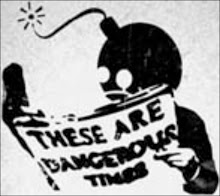
You just know our s̶u̶b̶u̶r̶b̶a̶n̶ ̶s̶o̶l̶i̶c̶i̶t̶o̶r̶ sorry Attorney General will not understand this at all
Wha Dat Hi Fi In Session (1985)
Featuring: Little John, Pampidoo, Philip Fraser, Tippa Lee & Rappa Roberts, Yami Bolo, Danny Culture and Barry G
Via
+
Luc Sante: Arleen
Let me play you “Arleen,” by General Echo, a seven-inch 45 on the Techniques label, produced by Winston Riley, a number one hit in Jamaica in the autumn of 1979. “Arleen” is in the Stalag 17 riddim, a slow, heavy, insinuating track that is nearly all bass—the drums do little more than bracket and punctuate, and the original’s brass-section color has been entirely omitted in this version. I’m not really sure what Echo is saying. It sounds like “Arleen wants to dream with a dream.” A dream within a dream. Whether or not those are his actual words, it is the immediate sense. The riddim is at once liquid and halting, as if it were moving through a dark room filled with hanging draperies, incense and ganja smoke, sluggish and nearly impenetrable air—the bass walks and hurtles. Echo’s delivery is mostly talkover, with just a bit of sing-song at the end of the verse. It is suggestive, seductive, hypnotic, light-footed, veiling questionable designs under a scrim of innocence, or else addled, talking shit in a daze as a result of an injury: “My gal Arleen, she love whipped cream/Every time I check her she cook sardine….”
Continue reading
Max Roach & M’Boom, Bobby Hebb with Ron Carter & The Persuasions - Live on SOUL! (17/11/71)
HERE
+
"The Roots of Black Protest" Max Roach & the J.C. White Singers
Arthur Burghardt as Frederick Douglass
+
"The Roots of Black Protest" Max Roach & the J.C. White Singers
Arthur Burghardt as Frederick Douglass
Thursday, 26 March 2015
Tracking Britain's jihadists
HERE
Interestingly on the day that Australia brought in mandatory data retention because you know "terrorism" that Alex Murray one of the journalists who worked on this piece at the BBC said on Facebook: "One of our key findings is that the importance of "radicalisation by internet" is less important than friendships and peer groups, which challenges one narrative which is frequently repeated and induces a public paranoia about the threat"
Peter Greste on the just passed metadata bill
Even if we wanted to live in a police state, history suggests that we can never really truly deal with terrorism.
And that perversely, the best way to tackle extremism of any sort is to keep an open, accountable society with a free media, able to do its job, interrogating not just governments, but those whose opinions tend to drift off into the political extremes...
Obviously there’s been a lot of discussion and debate about the metadata legislation and I haven’t been in the country long enough to really get involved at a personal level.I would like to take a closer look and see what we can do with that, but I think that we need to, as I said, hold to those principles and have a bigger debate about what the relationship should be between the press and the government.Which way do we want to go with this? Do we want to head towards more authoritarianism or head towards more accountability? That’s the way the slider works. It seems to me to be quite binary and we need to be conscious of that dilemma.That’s the discussion that the nation needs to have
Peter Greste calls for universal charter of media freedoms
Subscribe to:
Posts (Atom)

.jpg)


.jpg)
.jpg)