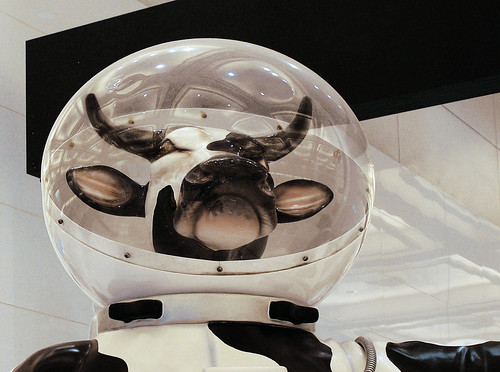
Around 13,500 troops will be deployed at the London 2012 Olympics, more than are currently at war in Afghanistan. Photograph: Locog/EPA
As a metaphor for the
London Olympics, it could hardly be more stark. The much-derided "Wenlock" Olympic mascot is now available in London Olympic stores dressed as a Metropolitan
police officer. For £10.25 you, too, can own the ultimate symbol of the Games: a member of by far the biggest and most expensive security operation in recent British history packaged as tourist commodity. Eerily, his single panoptic-style eye, peering out from beneath the police helmet, is reminiscent of the all-seeing eye of God so commonly depicted at the top of Enlightenment paintings. In these, God's eye maintained a custodial and omniscient surveillance on His unruly subjects far below on terra firma.
The imminent Olympics will take place in a city still recovering from riots that the Guardian-LSE
Reading the Riots project showed were partly fuelled by resentment at their lavish cost. Last week,
the UK spending watchdog warned that the overall costs of the Games were set to be at least £11bn – £2 bn over even recently inflated budgets. When major infrastructure projects such as Crossrail, speeded up for the Games, are factored in, the figure may be as high as £24bn, according to Sky News. The estimated cost put forward only seven years ago when the Games were won was £2.37 bn.
With the required numbers of security staff more than doubling in the last year, estimates of the Games' immediate security costs have doubled from £282m to £553m. Even these figures are likely to end up as dramatic underestimates: the final security budget of the 2004 Athens Olympics were around £1bn.
All this in a city convulsed by massive welfare, housing benefit and legal aid cuts, spiralling unemployment and rising social protests. It is darkly ironic, indeed, that large swaths of London and the UK are being thrown into ever deeper insecurity while being asked to pay for a massive security operation, of unprecedented scale, largely to protect wealthy and powerful people and corporations.
Critics of the Olympics have not been slow to point out the dark ironies surrounding the police Wenlock figure. "Water cannon and steel cordon sold separately," mocks Dan Hancox on the influential
Games Monitor website. "Baton rounds may be unsuitable for small children."
In addition to the concentration of sporting talent and global media, the London Olympics will host the biggest mobilisation of
military and security forces seen in the UK since the second world war.
More troops – around 13,500 – will be deployed than are currently at war in Afghanistan. The growing security force is being estimated at anything between 24,000 and 49,000 in total. Such is the secrecy that no one seems to know for sure.
During the Games an aircraft carrier will dock on the Thames. Surface-to-air missile systems will scan the skies. Unmanned drones, thankfully without lethal missiles, will loiter above the gleaming stadiums and opening and closing ceremonies. RAF Typhoon Eurofighters will fly from RAF Northolt. A thousand armed US diplomatic and FBI agents and 55 dog teams will patrol an Olympic zone partitioned off from the wider city by an 11-mile, £80m, 5,000-volt electric fence.
Beyond these security spectaculars, more stealthy changes are underway. New, punitive and potentially invasive laws such as the London Olympic Games Act 2006 are in force. These legitimise the use of force, potentially by private security companies, to proscribe Occupy-style protests. They also allow Olympic security personnel to deal forcibly with the display of any commercial material that is deemed to challenge the complete management of London as a "clean city" to be branded for the global TV audience wholly by prime corporate sponsors (including McDonald's, Visa and Dow Chemical).
London is also being wired up with a new range of scanners, biometric ID cards, number-plate and facial-recognition CCTV systems, disease tracking systems, new police control centres and checkpoints. These will intensify the sense of lockdown in a city which is already a byword across the world for remarkably intensive surveillance...
Continue reading