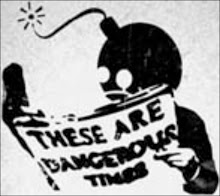
Eighty-four-year-old activist Dorli Rainey tells Keith about her experience getting pepper-sprayed by the police during an Occupy Seattle demonstration and the need to take action and spread the word of the Occupy movement. She cites the advice of the late Catholic nun and activist Jackie Hudson to “take one more step out of your comfort zone” as an inspiration, saying, “It would be so easy to say, ‘Well I’m going to retire, I’m going to sit around, watch television or eat bonbons,’ but somebody’s got to keep ’em awake and let ’em know what is really going on in this world.”
Via
Thursday, 17 November 2011
kickstarter Kickstarter
We cannot remain silent while the legal foundations behind our rights to creative expression on the net are threatened: kck.st/tjaSoh
ioerror Jacob Appelbaum
Noisebridge noisebridge.net and The Tor Project torproject.org stand against censorship - especially#SOPA : americancensorship.org
Noisebridge noisebridge.net and The Tor Project torproject.org stand against censorship - especially
:)
Dirk57 Dirk Hanson
Very sorry to hear it... RT@PLoSONE: Drum circles promote social cohesiveness bit.ly/vzaa8K
Very sorry to hear it... RT
Rebecca MacKinnon: Stop the Great Firewall of America
China operates the world’s most elaborate and opaque system of Internet censorship. But Congress, under pressure to take action against the theft of intellectual property, is considering misguided legislation that would strengthen China’s Great Firewall and even bring major features of it to America.
The legislation — the Protect IP Act, which has been introduced in the Senate, and a House version known as the Stop Online Piracy Act — have an impressive array of well-financed backers, including the United States Chamber of Commerce, the Motion Picture Association of America, the American Federation of Musicians, the Directors Guild of America, the International Brotherhood of Teamsters and the Screen Actors Guild. The bills aim not to censor political or religious speech as China does, but to protect American intellectual property. Alarm at the infringement of creative works through the Internet is justifiable. The solutions offered by the legislation, however, threaten to inflict collateral damage on democratic discourse and dissent both at home and around the world.
The bills would empower the attorney general to create a blacklist of sites to be blocked by Internet service providers, search engines, payment providers and advertising networks, all without a court hearing or a trial. The House version goes further, allowing private companies to sue service providers for even briefly and unknowingly hosting content that infringes on copyright — a sharp change from current law, which protects the service providers from civil liability if they remove the problematic content immediately upon notification. The intention is not the same as China’s Great Firewall, a nationwide system of Web censorship, but the practical effect could be similar.
Abuses under existing American law serve as troubling predictors for the kinds of abuse by private actors that the House bill would make possible. Take, for example, the cease-and-desist letters that Diebold, a maker of voting machines, sent in 2003, demanding that Internet service providers shut down Web sites that had published internal company e-mails about problems with the company’s voting machines. The letter cited copyright violations, and most of the service providers took down the content without question, despite the strong case to be made that the material was speech protected under the First Amendment.
The House bill would also emulate China’s system of corporate “self-discipline,” making companies liable for users’ actions. The burden would be on the Web site operator to prove that the site was not being used for copyright infringement. The effect on user-generated sites like YouTube would be chilling.
YouTube, Twitter and Facebook have played an important role in political movements from Tahrir Square to Zuccotti Park. At present, social networking services are protected by a “safe harbor” provision of the Digital Millennium Copyright Act, which grants Web sites immunity from prosecution as long as they act in good faith to take down infringing content as soon as rights-holders point it out to them. The House bill would destroy that immunity, putting the onus on YouTube to vet videos in advance or risk legal action. It would put Twitter in a similar position to that of its Chinese cousin, Weibo, which reportedly employs around 1,000 people to monitor and censor user content and keep the company in good standing with authorities.
Compliance with the Stop Online Piracy Act would require huge overhead spending by Internet companies for staff and technologies dedicated to monitoring users and censoring any infringing material from being posted or transmitted. This in turn would create daunting financial burdens and legal risks for start-up companies, making it much harder for brilliant young entrepreneurs with limited resources to create small and innovative Internet companies that empower citizens and change the world.
Adding to the threat to free speech, recent academic research on global Internet censorship has found that in countries where heavy legal liability is imposed on companies, employees tasked with day-to-day censorship jobs have a strong incentive to play it safe and over-censor — even in the case of content whose legality might stand a good chance of holding up in a court of law. Why invite legal hassle when you can just hit “delete”?
The potential for abuse of power through digital networks — upon which we as citizens now depend for nearly everything, including our politics — is one of the most insidious threats to democracy in the Internet age. We live in a time of tremendous political polarization. Public trust in both government and corporations is low, and deservedly so. This is no time for politicians and industry lobbyists in Washington to be devising new Internet censorship mechanisms, adding new opportunities for abuse of corporate and government power over online speech. While American intellectual property deserves protection, that protection must be won and defended in a manner that does not stifle innovation, erode due process under the law, and weaken the protection of political and civil rights on the Internet.
The legislation — the Protect IP Act, which has been introduced in the Senate, and a House version known as the Stop Online Piracy Act — have an impressive array of well-financed backers, including the United States Chamber of Commerce, the Motion Picture Association of America, the American Federation of Musicians, the Directors Guild of America, the International Brotherhood of Teamsters and the Screen Actors Guild. The bills aim not to censor political or religious speech as China does, but to protect American intellectual property. Alarm at the infringement of creative works through the Internet is justifiable. The solutions offered by the legislation, however, threaten to inflict collateral damage on democratic discourse and dissent both at home and around the world.
The bills would empower the attorney general to create a blacklist of sites to be blocked by Internet service providers, search engines, payment providers and advertising networks, all without a court hearing or a trial. The House version goes further, allowing private companies to sue service providers for even briefly and unknowingly hosting content that infringes on copyright — a sharp change from current law, which protects the service providers from civil liability if they remove the problematic content immediately upon notification. The intention is not the same as China’s Great Firewall, a nationwide system of Web censorship, but the practical effect could be similar.
Abuses under existing American law serve as troubling predictors for the kinds of abuse by private actors that the House bill would make possible. Take, for example, the cease-and-desist letters that Diebold, a maker of voting machines, sent in 2003, demanding that Internet service providers shut down Web sites that had published internal company e-mails about problems with the company’s voting machines. The letter cited copyright violations, and most of the service providers took down the content without question, despite the strong case to be made that the material was speech protected under the First Amendment.
The House bill would also emulate China’s system of corporate “self-discipline,” making companies liable for users’ actions. The burden would be on the Web site operator to prove that the site was not being used for copyright infringement. The effect on user-generated sites like YouTube would be chilling.
YouTube, Twitter and Facebook have played an important role in political movements from Tahrir Square to Zuccotti Park. At present, social networking services are protected by a “safe harbor” provision of the Digital Millennium Copyright Act, which grants Web sites immunity from prosecution as long as they act in good faith to take down infringing content as soon as rights-holders point it out to them. The House bill would destroy that immunity, putting the onus on YouTube to vet videos in advance or risk legal action. It would put Twitter in a similar position to that of its Chinese cousin, Weibo, which reportedly employs around 1,000 people to monitor and censor user content and keep the company in good standing with authorities.
Compliance with the Stop Online Piracy Act would require huge overhead spending by Internet companies for staff and technologies dedicated to monitoring users and censoring any infringing material from being posted or transmitted. This in turn would create daunting financial burdens and legal risks for start-up companies, making it much harder for brilliant young entrepreneurs with limited resources to create small and innovative Internet companies that empower citizens and change the world.
Adding to the threat to free speech, recent academic research on global Internet censorship has found that in countries where heavy legal liability is imposed on companies, employees tasked with day-to-day censorship jobs have a strong incentive to play it safe and over-censor — even in the case of content whose legality might stand a good chance of holding up in a court of law. Why invite legal hassle when you can just hit “delete”?
The potential for abuse of power through digital networks — upon which we as citizens now depend for nearly everything, including our politics — is one of the most insidious threats to democracy in the Internet age. We live in a time of tremendous political polarization. Public trust in both government and corporations is low, and deservedly so. This is no time for politicians and industry lobbyists in Washington to be devising new Internet censorship mechanisms, adding new opportunities for abuse of corporate and government power over online speech. While American intellectual property deserves protection, that protection must be won and defended in a manner that does not stifle innovation, erode due process under the law, and weaken the protection of political and civil rights on the Internet.
Rebecca MacKinnon, a senior fellow at the New America Foundation and a founder of Global Voices Online, is the author of the forthcoming “Consent of the Networked: The Worldwide Struggle for Internet Freedom.”
@'NY Times'
@'NY Times'
̶S̶o̶r̶r̶y̶,̶ ̶g̶o̶v̶e̶r̶n̶m̶e̶n̶t̶a̶l̶ ̶d̶i̶f̶f̶i̶c̶u̶l̶t̶i̶e̶s̶ https://www.eff.org/deeplinks/2011/11/explosion-opposition-internet-blacklist-bill
xeni Xeni Jardin
A pregnant woman, an elderly woman, and a priest walk into a cloud of tear gas…#occupySeattleJokes #NotFunny
A pregnant woman, an elderly woman, and a priest walk into a cloud of tear gas…
PROTECT IP Act Breaks The Internet
Tell Congress not to censor the internet NOW! - fightforthefuture.org/pipa
PROTECT-IP is a bill that has been introduced in the Senate and the House and is moving quickly through Congress. It gives the government and corporations the ability to censor the net, in the name of protecting "creativity". The law would let the government or corporations censor entire sites-- they just have to convince a judge that the site is "dedicated to copyright infringement."
The government has already wrongly shut down sites without any recourse to the site owner. Under this bill, sharing a video with anything copyrighted in it, or what sites like Youtube and Twitter do, would be considered illegal behavior according to this bill.
According to the Congressional Budget Office, this bill would cost us $47 million tax dollars a year — that's for a fix that won't work, disrupts the internet, stifles innovation, shuts out diverse voices, and censors the internet.
PROTECT-IP is a bill that has been introduced in the Senate and the House and is moving quickly through Congress. It gives the government and corporations the ability to censor the net, in the name of protecting "creativity". The law would let the government or corporations censor entire sites-- they just have to convince a judge that the site is "dedicated to copyright infringement."
The government has already wrongly shut down sites without any recourse to the site owner. Under this bill, sharing a video with anything copyrighted in it, or what sites like Youtube and Twitter do, would be considered illegal behavior according to this bill.
According to the Congressional Budget Office, this bill would cost us $47 million tax dollars a year — that's for a fix that won't work, disrupts the internet, stifles innovation, shuts out diverse voices, and censors the internet.
Stop SOPA, Save The Internet
Thoughts On The House Judiciary Committee's Hearings On SOPA
(Thanx Steve!)
Word Podcast 194 - with Nile Rodgers
Nile Rodgers' book Le Freak: An Upside Down Story Of Family, Disco and Destiny is the extraordinary story of the man who created the only triple platinum single in the history of Atlantic Records and led Chic through the ups and downs of disco.
He came into the pod to talk about it all, and how he went on to produce Diana Ross, David Bowie, Duran Duran and Madonna, while, as the old saying goes, not so much burning the candle at both ends as applying a blowtorch to the middle.
Also covered in a breathless 45 minutes: a novel way to learn the guitar, why the Black Panther movement was a lot like the cub scouts, what it's like to spend much of your childhood in an oxygen tent, and why cults are cool.
Show notes:
Chic doing Le Freak in 1978
Diana Ross and Coming Out (featuring the God-like genius of the late Tony Thompson on the drums).
David Bowie's Let's Dance with the chorus at the beginning.
Madonna, the Thompson Twins and Nile Rodgers doing Revolution at Live Aid.
Via
He came into the pod to talk about it all, and how he went on to produce Diana Ross, David Bowie, Duran Duran and Madonna, while, as the old saying goes, not so much burning the candle at both ends as applying a blowtorch to the middle.
Also covered in a breathless 45 minutes: a novel way to learn the guitar, why the Black Panther movement was a lot like the cub scouts, what it's like to spend much of your childhood in an oxygen tent, and why cults are cool.
Show notes:
Chic doing Le Freak in 1978
Diana Ross and Coming Out (featuring the God-like genius of the late Tony Thompson on the drums).
David Bowie's Let's Dance with the chorus at the beginning.
Madonna, the Thompson Twins and Nile Rodgers doing Revolution at Live Aid.
Via
Transgender Europe: Press Release (November 16th 2011)
Transgender Europe's Trans Murder Monitoring project reveals 221 killings of trans people in the last 12 monthsIn total, since January 2008 the murders of 755 trans people have been reported
The 13th International Transgender Day of Remembrance is being held on November 20th 2011: Since 1999, the Transgender Day of Remembrance (TDOR), on which those trans people who have been victims of homicide are remembered, takes place every November. The TDOR raises public awareness of hate crimes against trans people, provides a space for public mourning and honours the lives of those trans people who might otherwise be forgotten. Started in the USA, the TDOR is now held in many parts of the world. In the past, the TDOR took place in more than 180 cities in more than 20 countries in North America, Europe, Asia, Africa, and Oceania.Sadly, this year there are 221 trans persons to be added to the list to be remembered, mourned and honoured as an update of the preliminary results of Transgender Europe's Trans Murder Monitoring project reveals.
The Trans Murder Monitoring (TMM) project started in April 2009 and systematically monitors, collects and analyses reports of homicides of trans people worldwide. Updates of the preliminary results, which have been presented in July 2009 for the first time, are published on the website of the "Transrespect versus Transphobia Worldwide" project three to four times a year in form of tables, name lists, and maps:
http://www.transrespect-transphobia.org/en_US/tvt-project/tmm-results.htm
Every year in November, Transgender Europe provides a special update of the TMM results for the International Transgender Day of Remembrance so as to assist activists worldwide in raising public awareness of hate crimes against trans people.
The TDOR 2011 update has revealed a shocking total of 221 cases of reported killings of trans people from November 20th 2010 to November 14th 2011:
http://www.transrespect-transphobia.org/en_US/tvt-project/tmm-results/tdor2011.htm
In comparison to the TDOR updates of the last years (162 reports 2009, 179 reports in 2010), we are witnessing a significant increase, which points to the extreme level of violence many trans people continue to be exposed to. However, this increase may also reflect the TvT project's intensified cooperation and data exchange with trans and LGBT organizations, which document murders of LGBT or trans people in local and national contexts such as Grupo Gay da Bahia (Brazil), Observatorio Ciudadano Trans (Cali, Colombia), Pembe Hayat (Turkey), or TVMEX-Travestis México.
The update shows reports of murdered or killed trans people in 26 countries in the last 12 months, with the majority from Brazil (97), Mexico (23), Colombia (19), and Venezuela (14) followed by Argentina (9), Honduras (9), and the USA (9). In Asia most reported cases have been found in Pakistan (6), and the Philippines (5), and in Europe in Turkey (5).
In total, the preliminary results show 755 reports of murdered trans people in 51 countries since January 2008.
[...]
Yet, we know, even these high numbers are only a fraction of the real figures; the truth is much worse.
[...]
If you have further questions or if you want to support the research project, please contact the TvT research team:
Dr Carsten Balzer and Dr Jan Simon Hutta
research[at]transrespect-transphobia.org
www.transrespect-transphobia.org
Subscribe to:
Comments (Atom)