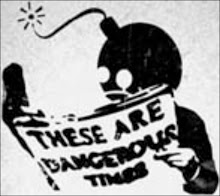
We are disappointed to learn that that the management of St Paul’s have decided to close the Cathedral this afternoon, in their open letter regarding our peaceful occupation that aims to highlight and challenge the social and economic injustice in the UK and beyond.
Since the beginning of the occupation six days ago, OccupyLSX have tried hard to accommodate the Cathedral’s concerns in any way we can. Over the past 48 hours, we have completely re-organised the camp in response to feedback from the Fire Brigade and we have also accepted the presence of two large barriers to preserve access to the side door of the Cathedral.
Both of these measures were accepted by the General Assembly in order that the Cathedral’s normal operations should not be unduly impacted by our presence. This afternoon we have been told, in a telephone call, by the fire brigade, that they have not issued any new requirements above and beyond those already communicated directly to the camp. Therefore, there are no outstanding fire safety issues.
What outstanding issues there are appear to be concerned with, firstly, health and safety and, secondly, the Cathedral’s commercial concerns. We seek clarification from the Cathedral as to the precise nature of those health and safety concerns, so that we might address them directly. In the short space of time that we have been here, we have successfully liaised with the City authorities and outside bodies to coordinate recycling and sanitation.
As to the Cathedral’s commercial concerns, access to the restaurant has never been blocked by the encampment. The closure of the restaurant, by the Cathedral, has mystified us, especially as it came at the same time as we encouraged our people to use and support the restaurant. We would much prefer to eat there than in some of the nearby chains.
We believe the Cathedral is also concerned about their visitor numbers. We have endeavoured to ensure that our schedule does not conflict with the Cathedral’s, so that their normal operations are not impaired. Clearly, we have become another tourist attraction on the Cathedral’s doorstep – but, since we are not a commercial concern, we are struggling to understand how we have had any financial impact on the Cathedral’s revenues.
We also understand that some individuals were in the process of arranging for a contribution to be made to St Paul’s in recognition of their hospitality. It is a shame the Cathedral authorities have decided to take this action before those preparations came to fruition, as we expected them to in the next 12 hours.
Over the course of this week, we have done a huge amount to draw attention to the crisis of economic and political legitimacy experienced in the UK and mirrored in protests staged across the world. That awareness-raising exercise – and our attempts to provide a truly participatory and accountable forum in which to investigate ways forward – will continue.
Via
Saturday, 22 October 2011

Even Muammar Gaddafi deserved a private death
Western foreign policy in recent years has combined with the democratisation of filmed images to create a stark new problem for media organisations: the existence of images of regime-changed leaders before, during and after the moment of death. Scenes of the hanging of Saddam Hussein were widely broadcast and printed, as snuff shots of Osama bin Laden surely also would have been if the American government had not decided (correctly, I think) to suppress the material filmed by its hit squad.
And the pictures of the terrified, wounded and then possibly dead Muammar Gaddafi used on TV bulletins and the print and online editions of newspapers in the last 24 hours seemed to me to be, by some distance, the most graphic and distressing representations we have ever seen of a recognisable individual during his final moments. The sense that these images significantly extended journalistic incursions across the historical borders of editorial taste is underlined by the intense objections on media sites, including the Guardian and the BBC.
Traditionally, shots of people in terminal extremis have been one of the strongest taboos for broadcasters and newspapers, leading to intermittent controversies when a medical or science programme on TV has shown (with the consent of the patients and their family) the moment of death. Such fusses result from a residual feeling in society that there should be dignity and privacy in death and the obligation imposed on editors (by such organisations as the PCC and Ofcom) not to cause unnecessary or unheralded offence to sensitive consumers.
Two developments – one cultural, one technological – have challenged this editorial decorum with results first noticed with the execution of Saddam five years ago and climaxing in the Gaddafi gallery yesterday. A common argument in favour of explicit pictures is that, in an instinctively suspicious and conspiratorial age, national and international communities, a global village of Doubting Thomases, will only accept that the villain is dead if they have seen the corpse. But this thesis is weakened because the reflex incredulity of our times necessarily extends even to any images that do emerge: when the Americans held back the Bin Laden death shots, online photographic pranksters mocked-up their own.
The most significant (and probably irresistible) change, however, is that the dissemination of contentious images has now largely left the desks of editors and regulators. Symbolically and crucially, the footage of Gaddafi's capture and assault was shot not by a crew but by a crowd on cellphones. TV or newspaper editors who ethically decide to bin the most distressing images know, unlike their predecessors, that the views will be generally available elsewhere and that curiosity will draw a large part of the audience there.
But the risk is the development of a culture of death porn. For me, as a simple moral position, Gaddafi merits as much privacy in his final extremities as did his victims in the Lockerbie bombing: a germane example from the past of a time when the media by common consent suppressed horrific images in the cause of taste and privacy.
The issue is most acute for newspapers because a front page (either paper or online) is designed to take readers unawares and attract the curiosity of passing trade. Unlike in television, no warning can be given of what is about to be seen, although, for me, the standard warnings given by broadcasters yesterday ("images which some viewers may find offensive") were inadequate for the leap in morbid detail that some of these pictures represented.
Though having largely caused the problem by making editorial control of questionable images so much harder to impose, online media may also be best placed to solve it. The most potentially upsetting images could be kept from general bulletins and front pages and restricted to online boxes which, like the curtained-off sections of art galleries, allow admission only to those who know what they are getting. Even presidents, Bill Clinton once pleaded, deserve a private life. Even tyrants, I would argue, deserve a private death.
Mark Lawson @'The Guardian'
And the pictures of the terrified, wounded and then possibly dead Muammar Gaddafi used on TV bulletins and the print and online editions of newspapers in the last 24 hours seemed to me to be, by some distance, the most graphic and distressing representations we have ever seen of a recognisable individual during his final moments. The sense that these images significantly extended journalistic incursions across the historical borders of editorial taste is underlined by the intense objections on media sites, including the Guardian and the BBC.
Traditionally, shots of people in terminal extremis have been one of the strongest taboos for broadcasters and newspapers, leading to intermittent controversies when a medical or science programme on TV has shown (with the consent of the patients and their family) the moment of death. Such fusses result from a residual feeling in society that there should be dignity and privacy in death and the obligation imposed on editors (by such organisations as the PCC and Ofcom) not to cause unnecessary or unheralded offence to sensitive consumers.
Two developments – one cultural, one technological – have challenged this editorial decorum with results first noticed with the execution of Saddam five years ago and climaxing in the Gaddafi gallery yesterday. A common argument in favour of explicit pictures is that, in an instinctively suspicious and conspiratorial age, national and international communities, a global village of Doubting Thomases, will only accept that the villain is dead if they have seen the corpse. But this thesis is weakened because the reflex incredulity of our times necessarily extends even to any images that do emerge: when the Americans held back the Bin Laden death shots, online photographic pranksters mocked-up their own.
The most significant (and probably irresistible) change, however, is that the dissemination of contentious images has now largely left the desks of editors and regulators. Symbolically and crucially, the footage of Gaddafi's capture and assault was shot not by a crew but by a crowd on cellphones. TV or newspaper editors who ethically decide to bin the most distressing images know, unlike their predecessors, that the views will be generally available elsewhere and that curiosity will draw a large part of the audience there.
But the risk is the development of a culture of death porn. For me, as a simple moral position, Gaddafi merits as much privacy in his final extremities as did his victims in the Lockerbie bombing: a germane example from the past of a time when the media by common consent suppressed horrific images in the cause of taste and privacy.
The issue is most acute for newspapers because a front page (either paper or online) is designed to take readers unawares and attract the curiosity of passing trade. Unlike in television, no warning can be given of what is about to be seen, although, for me, the standard warnings given by broadcasters yesterday ("images which some viewers may find offensive") were inadequate for the leap in morbid detail that some of these pictures represented.
Though having largely caused the problem by making editorial control of questionable images so much harder to impose, online media may also be best placed to solve it. The most potentially upsetting images could be kept from general bulletins and front pages and restricted to online boxes which, like the curtained-off sections of art galleries, allow admission only to those who know what they are getting. Even presidents, Bill Clinton once pleaded, deserve a private life. Even tyrants, I would argue, deserve a private death.
Mark Lawson @'The Guardian'
Pearl Jam Live at the Bridge Benefit 10-24-10

Download
Via
Reprise Records is celebrating the 25th anniversary of the annual Bridge School Benefit Concerts with retrospective DVD and CD sets featuring some of the best performances at the shows from over the years. In this clip from the DVD set, Bridge School mainstays Pearl Jam play a muted, haunting rendition of their hit "Better Man," with Eddie Vedder putting a slightly different spin on his usual melodic phrasing.
The sets, which include acoustic performances by superstars such as Bruce Springsteen, Paul McCartney, David Bowie, R.E.M., Tom Petty, Metallica, Simon and Garfunkel, Bob Dylan and Neil Young, will hit stores on October 24th. All the proceeds will go the Bridge School charity.
Via
Official: U.S. pulling out all troops from Iraq
The United States will withdraw almost all its troops from Iraq by the end of the year, as a current agreement with Iraq dictates, a U.S. official told CNN Friday. Only about 150 troops, a negligible force, will remain to assist in arms sales.
The United States had expected that some of the roughly 40,000 Americans in Iraq would remain there to aid in training and security.
But the two nations were unable to reach a deal on a key issue regarding legal immunity for U.S. troops, a senior U.S. military official with direct knowledge of the discussions told CNN this month.
The United States wanted to retain immunity but the Iraqis refused to agree to that, opening up the prospect of Americans being tried in Iraqi courts and subjected to Iraqi punishment.
The negotiations were strained following WikiLeaks' release of a diplomatic cable that alleged Iraqi civilians, including children, were killed in a 2006 raid by American troops rather than in an airstrike as initially reported by the U.S. military.
@'CNN'

The United States had expected that some of the roughly 40,000 Americans in Iraq would remain there to aid in training and security.
But the two nations were unable to reach a deal on a key issue regarding legal immunity for U.S. troops, a senior U.S. military official with direct knowledge of the discussions told CNN this month.
The United States wanted to retain immunity but the Iraqis refused to agree to that, opening up the prospect of Americans being tried in Iraqi courts and subjected to Iraqi punishment.
The negotiations were strained following WikiLeaks' release of a diplomatic cable that alleged Iraqi civilians, including children, were killed in a 2006 raid by American troops rather than in an airstrike as initially reported by the U.S. military.
@'CNN'
ggreenwald Glenn Greenwald
It's great troops will leave Iraq- note: 1-this was Bush's withdraw agreement; 2-Obama admin wanted troops to stay; 3- is.gd/1F5UE9

attackerman attackerman
If this is a dig at Rick Perry, then well played, State Department, well played. 1.usa.gov/pdg2My

fffffat F.A.T. Lab
RT @nytimes: Website of Goldman Sachs is currently in the hands of hacker activists: j.mp/oo7FHE
Horse Kisses (#OccupyMelbourne)


@AdamBandt Adam Bandt
Baillieu and Doyle have made the wrong call by sending in riot police at #occupymelbourne

TopHashtags Top Hashtags
In Australia/12h: 1.#occupymelbourne 2.#ff 3.#auspol 4.#occupymelb 5.#rwc2011
The City Square After #OccupyMelbourne


#OccupyMelbourne - The Whole World Is Watching! (21/10/11)
I am sorry Mr Policeman could you please explain again exactly how we can be trespassing in OUR City Square in this the world's most liveable city?
What rights? Police powers and the Charter

When the Summary Offences and Control of Weapons Acts Amendment (SOCW) Bill was passed during a late-night sitting of the upper house of the Victorian Parliament earlier this month, it became obvious how weak Victoria’s proud new Human Rights Charter really is. In particular, it became obvious how ready our elected representatives are to ignore the Charter altogether.
The SOCW Act has now given police in Victoria increased powers to search any person including a child in a designated area, even when there is no reasonable suspicion that the person is carrying a weapon. The government itself, in a statement put together by the minister for the purposes of review by the Scrutiny of Acts and Regulations Committee, admits that this new power is a breach of the Charter of Human Rights.
In the minister’s own words, the SOCW Act is ‘incompatible with the charter to the extent that it limits rights … in providing powers for police to randomly search persons (including children) and vehicles in public places within designated areas, even if the police have not formed a reasonable suspicion that the person or vehicle is carrying a weapon’. Moreover, there is no exemption for peaceful protests applying to the random search powers. Accordingly, these powers breach the rights of freedom of association and freedom of expression contained in the Charter.
Under the Act, the police may conduct pre-arrest strip searches of any person, including children, in certain circumstances. The government has sought to justify this in the interests of community safety, but this is a grossly insufficient justification for a law that disregards fundamental human rights.
The police also have increased powers to move people on. These new ‘move-on’ powers are distressingly broad. For example, under the new laws the police have power to give directions to a person to ‘move on’ whenever an officer believes the person ‘is likely to breach the peace’ or ‘is likely to endanger the safety of other persons’.
As the Federation of Community Legal Centres noted in its letter to the Scrutiny of Acts and Regulations Committee of November 20, such broad move-on powers involve ‘granting police powers based on subjective predictions of future behaviour by individual police officers’. Such powers are inevitably ‘prone to be applied in a discriminatory and disproportionate way against some of our most vulnerable community members, including people who are homeless, young people, Aboriginal people and people experiencing mental health issues’.
A motion by Greens MLC Sue Pennicuik that would have seen the SOWC Act submitted to a process of public consultation, including a round table with the many social service and social justice organisations that have expressed concern at the new legislation, was voted down by both government and coalition members. In refusing to allow the SOWC to see the light of public consultation, the government has ignored the clear recommendation of the Victorian Privacy Commissioner.
In her submission to the Victorian Parliament’s Scrutiny of Acts and Regulations Committee, she said that she was ‘concerned with the lack of public consultation, including the lack of consultation with her office, regarding a proposal with such an adverse impact on the rights of Victorians’. Referring to the SOWC Bill, the Privacy Commissioner then went on to recommend ‘that the Bill not proceed until such time as proper consultation is undertaken necessary for a proposal of this kind’.
The Government is clearly prepared to pass into effect a new law which is incompatible with the Human Rights Charter. At least the government has been prepared to admit that parts of the new law are not compatible with the Charter. This admission includes an acceptance that limitations on human rights in the SOWC Act are not necessary, reasonable or demonstrably justified. As a Victorian-born citizen, I am no longer proud of our state’s new Human Rights Charter.
Alice de Jonge @'Liberty Victoria'
Image
Policewoman with missing identification tag @ #OccupyMelbourne 21/10/11


With reports in the media of people being arrested for taking photographs of police not wearing their correct identification tags, I suppose it was just plain helpful of me to suggest that it was purely perhaps an 'oversight' that she wasn't wearing hers :)
The police through Inspector Mick Beattie have of course denied that any police were not correctly badged up!!!
(Photos by TimN)
Asher_Wolf Asher Wolf
Nb. @exilestreet threatened with arrest *after* kindly pointing out to police woman the lack of ID badge was prob oversight #OccupyMelbourne
Subscribe to:
Posts (Atom)