Thursday, 6 October 2011

Hmmm!

(Click to enlarge)
(Thanx Tom!)

Primal Scream statement on Tory use of their music


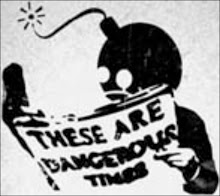
"Primal Scream are totally disgusted that The Home Secretary Theresa May ended her speech at the Tory party conference with our song 'Rocks".
How inappropriate. Didn't they research the political history of our band?
Hasn't she listened to the words? Does she even know what getting your rocks off means? No. She is a Tory; how could she?
Primal Scream are totally opposed to the coalition government, Cameron, Osborne, Gove, Howard, Clegg etc. They are legalised bullies passing new laws to ensure the wealthy stay wealthy, taking the side of big business while eradicating workers rights and continuing their attacks on young people, single parents and o.a.p.'s by slashing education and social security budgets,, in effect persecuting the poor for being poor.
We would like to distance ourselves from this sick association.
The Tories are waging a war on the disenfranchised, They are the enemy.
Primal Scream"

UPDATE:
OOPS! She actually used 'Bohemian Like You'!!!

Australian Songwriter Paul Kelly Sings the Hits, from A to Z

A stood for "Adelaide," singer-songwriter Paul Kelly's ode to his hometown in Australia, and "Anastasia Changes Her Mind." The B's included the wry warning "Be Careful What You Pray For" and "Before Too Long," one of Kelly's best early songs, from his 1986 Australian double album, Gossip. And the D's ran the range from "Deeper Water," with its opening memory of Kelly's dad teaching him how to swim, to the rock-bottom account "Dumb Things." The latter was originally cut as seething electric garage for 1988's Under the Sun. But at Rockwood Music Hall in New York on September 26th, Kelly played it as solo self-recrimination – "I lost my shirt/I pawned my rings/I've done all the dumb things" – with his nephew, singer-guitarist Dan Kelly, adding amp jangle and plaintive harmonies.
This show, the first of two at Rockwood and the end of a brief U.S. visit, was "the speed-dial version," as Paul put it, of From A-Z, a live alphabetical retrospective of Kelly's life's work as Australia's Bob Dylan and Elvis Costello combined, in narrative candor, trap-door wit and devotion to rock's country, folk and blues roots. Kelly was already a welcome alternative in the New Wave Eighties to the Joe Jackson-Graham Parker model – less acidic, with strong local color in his tales – with his band Paul Kelly and the Dots and on his 1985 solo debut, Post, which included one of this show's F's: the homesick ballad "From St. Kilda to Kings Cross."
All of His Best, Up to L
There is no evening long enough to cover the best of Kelly. Tonight he only made it to L, with M-Z promised for the second Rockwood show. Even that's not enough: Kelly usually does From A-Z as a four-gig stand. (He will be back in the U.S. next year and plans more full-length engagements.) But even in this hastened form, Kelly's storytelling – framed by pithy guitar hooks, with a grainy conversational magnetism in his singing – revealed his unique spin on a world of echoes: Hank Williams, Willie Dixon, Paul Simon, Lou Reed. Before performing 1989's "Everything's Turned White," Kelly acknowledged his debt to Raymond Carver's short story "So Much Water, So Close to Home" (Kelly used that title in his chorus). And Kelly explained how the lesson of Irving Berlin's "White Christmas" – how to write a holiday classic about absence and missing – inspired "How to Make Gravy," a tender letter from a jailbird who won't be home for the family feast.
Much of what Kelly played at Rockwood is on the two-CD set, Greatest Hits: Songs From the South Volumes 1 & 2 (Gawd Aggie) a previous Australian release out here on October 25th. The A-Z Recordings (Gawd Aggie) is an 8-CD anthology, released in Oz last year, of live recordings from Kelly's alphabet shows over the past half-dozen years. And Kelly's 2010 autobiography, How to Make Gravy: A-Z, A Mongrel Memoir (Penguin Global), is his engaging way with a stage anecdote gone long. The book is especially strong on how and why the songs get written, like the riff analysis in Keith Richards' Life minus the knives and rock-pirate action. (The A-Z Recordings and How to Make Gravy are available at Amazon.)
Leaps and Bounds
Missing from the D's at Rockwood was "Darling It Hurts," a Sixties-beat dynamo from Gossip with its chorus pun on Darlinghurst, a Sydney neighborhood. But representing L, E and F were the exuberant "Leaps and Bounds," the hilariously despairing "Every Fucking City" and a succinct example of Kelly's ingenuity with opposites, "From Little Things Big Things Grow," from 1991's Comedy. The melody is a lullabye, the rhythm is a waltz. But the subject is moral strength: an aboriginal man who fought an entire government for the return of ancestral lands – and won.
There was also a new song, so new Kelly hasn't formally cut it yet (although there's a live version in the A-Z box). "I Keep Coming Back for More" was a dark bluesy thing about good intentions, punishing returns and a stubborn hope for just reward. Those are endless subjects, and they are already in a lot of Kelly's songs. But he hasn't run out of compelling variations – or letters.
David Fricke @'Rolling Stone'

DJ Shadow Talks About His Latest Sonic Collages

The most influential graphic arts blog of late-1920s Tokyo: Gendai Shogyo Bijutsu Zenshu

Over the past five years or so, a loose cadre of visual data miners at blogs including BibliOdyssey, 50 Watts, but does it float, Accidental Mysteries, Agence Eureka, and La Boite Verte (to name but a few) have collectively developed an on-line pictorial archive of inestimable value to artists and graphic designers who wish to renew their powers in the streams of history...

Cassette tapes see new life after MP3s

Information is Free

Tinariwen @ Arena Wien (02.11.2009)


The Designed-In Failures of Pentagon Strategy

Why the QDR Should Not Mention Cost

Obama’s Favorite Think Tank: Cut The Army, Forget Counterinsurgency

The Future of West Bank Terrorism Is Jewish

I was having a conversation with my mother on Sunday. Like many American Jews of her generation, her politics are to my left on pretty much everything -- except Israel. We got to talking about the settlements in a future/hypothetical State of Palestine. She asked: Post-statehood, why can't Israel just tell the settlers that now they're citizens of Palestine? If you live on one side of the border, shouldn't you just be Israeli; and on the other side, you're Palestinian?
And I sympathize! Life should work like that. And to some extent, it will: both sides agree in principle to negotiated land swamps during final-border negotiations, in order to -- for the purposes of this conversation -- incorporate the biggest and most contiguous settlement blocs (Ma'ale Adumim, for instance) into Israel. Lots of settlers live in the West Bank because successive Israeli governments made it financially sensible to settle there, rather than out of an ideological project of preventing the State of Palestine from ever existing.
But here's why Israel really does have to uproot most of the settlements.
After setting the fire in the early-morning hours, vandals spray-painted the words "revenge" and "price tag" on the walls of the mosque in the Bedouin village of Tuba-Zangaria.

Similar messages have been left in the West Bank, where attackers have burned mosques, cars belonging to Palestinians and olive trees. They have also vandalized an Israeli army base and the Jerusalem home of an Israeli anti-settlement activist.
Monday's mosque attack didn't happen in the West Bank. It happened in northern Israel. But what's happening there is a lagging indicator of what's happening in the West Bank. So says the Shin Bet. This is from a September 13 Ha'aretz piece:
Extreme right-wing Jewish activists in the West Bank have moved from spontaneous acts against Arabs -- following the demolition of Jewish homes by Israeli authorities, or terror attacks against Jews -- to organized planning that includes use of a database of potential targets, according to new analysis by the Shin Bet security service.
The small groups of Jewish extremists are difficult to infiltrate and carry out surveillance on Arab villages and collect information about access points and escape routes in the villages. They are also collecting information about left-wing Israeli activists.
This is a potential future, if the IDF and Israeli intelligence do not treat these settlers like they do Palestinian terrorists: imagine a Palestinian state that incorporates thousands of Israeli settlers as part of a final-status deal. Suddenly, the State of Palestine includes among its citizenry lots of wealthy, ethnically separate people who live in enclaves and stockpile weapons*. Unless Palestine bulldozes lots of access roads, they will have access to numerous transit routes.
They are not ethnic separatists in a traditional sense. They don't merely believe that they ought to live in the political entity known as Israel -- actually, in many cases they don't recognize Israeli political authority. They believe they must live in the West Bank for religious purposes. And their premiere political project is to stop the West Bank from falling under Palestinian sovereignty. Failing that, their premiere political project will be to roll that Palestinian sovereignty back. The only way to do that is the way that Palestinians have tried for decades on Israel: terrorism.
What Israelis, Palestinians, Americans and all other interested parties need to consider is what happens after the first incidents of Jewish terrorism inside the State of Palestine. Palestine will need to retaliate, as any state does. You can imagine a Palestinian defense or interior minister even picking a deliberately provocative title for an operation to uproot Jewish terror cells, like, say, Operation Defensive Shield. You can also imagine what will be on the minds of those Palestinian security forces: payback.
Suddenly we can imagine televised images of Palestinian cops in riot gear and soldiers in armor attacking people who look like -- and, probably, in many cases, are -- Jewish civilians. Women and children. The pressure on any Israeli government to retaliate will be overwhelming. The race to the violent bottom will accelerate.
Uprooting settlements will be emotionally wrenching work. We know this because the IDF already does it. And for its efforts, the settlers vilify the IDF; they also infiltrate it in the hopes of preventing settlement destruction. There will be many cries about making this-or-that part of the West Bank "Judenrein," designed for maximum emotional resonance. (It's been a standard settler tactic for decades.) But outside of incorporating select settlements into Israel through negotiated land swaps, the alternative is a continuation of the Israeli-Palestinian conflict after a (hypothetical) final status deal.
*When I was younger, my father had an apartment on Avenue J in Brooklyn's Midwood neighborhood. It's one of the commercial hearts of a rather, ah, conservative part of Jewish Brooklyn -- during the Second Intifada, you could see wheatpasted posters of Meir Kahane on streetlamps and the sides of buildings. When we'd go to get sandwiches at the deli, we'd see tzedakeh (charity) boxes on the counters. The small placards accompanying the boxes had pictures of snarling dogs. Their legends advertised that donations were needed to help our fellow Jews in Judea and Samaria defend themselves against the Arabs.
"Huh," I remember once saying to my dad after we left the deli, "so they buy Rottweilers for the settlers?"
"Are you kidding me?" he responded. "That's to buy them AK-47s."
Spencer Ackerman @'Attackerman'

Album cover juxtapositions

HERE

How Two Scammers Built an Empire Hawking Sketchy Software

Google senior management not using Google+?

McKenzie Wark, Copyright, Copyleft, Copygift