Sunday, 5 June 2011

Q&A: Lee 'Scratch' Perry

'My biggest disappointment? I have a very nagging wife.' Photograph: Getty Images
Lee "Scratch" Perry, 75, was born in Jamaica. In 1968 he formed a label, Upsetter Records, to record his own music; his first single was People Funny Boy. In 1969, he had his first British hit with Return Of Django. The same year he began to produce Bob Marley & The Wailers, beginning a long association that led to the popularisation of reggae and dub music. Perry went on to work with the Clash, Paul McCartney and the Beastie Boys. In 2003, he won a Grammy award for Best Reggae Album for his record Jamaican ET. He is the special guest at this weekend's We, The People festival in Bristol. He is married for the second time, and lives in Switzerland.
When were you happiest?
When I wake in the morning and go to the bathroom and go pee pee.
Which living person do you most admire?
Me.
What was your most embarrassing moment?
The most embarrassing moment anyone can have is when you run out of cash and have to ask for a loan. That happened to me in Jamaica 25 years ago. That's why I left.
What is your most treasured possession?
My music.
Where would you like to live?
I believe in Hell and Heaven. I'd prefer to live in Heaven than in Hell.
What would your super power be?
I'd fly from my enemies and turn invisible so they can't see me.
Who would play you in the film of your life?
All the fishes in the sea, all the birds in the air and all the animals in the jungle.
Cat or dog?
One day I had some birds in my house – I think birds are angels – and the cat ate one. I don't like cats any more.
What is your most unappealing habit?
Angels showed me how to live and what to eat, not to drink alcohol, not to smoke. Now I eat marijuana: I make curry and tea with it. If I had carried on drinking alcohol and smoking marijuana, I am sure I would not be talking to you now.
What is your favourite smell?
Cherry blossom and Chanel No 5.
What would you most like to wear to a costume party?
A George V gown, boots and crown.
To whom would you most like to say sorry, and why? 
God. God sees everything we do.
What was the best kiss of your life?
I refuse to kiss human beings as I am scared of getting a virus from things people eat. I prefer to kiss a tree, a rose, a bird or an animal. I used to kiss my cat until the cat ate my bird.
What has been your biggest disappointment?
I have a very nagging wife.
When did you last cry, and why?
When my mother died.
How often do you have sex?
My needs is not dead and my thing is still alive.
What is the closest you've come to death?
The last time I had a spliff, I made an extra big one and it knocked me out for a day, a night and another day.
What song would you like played at your funeral?
I don't think I will have a funeral but if I do, the song I would like to hear is my first hit, People Funny Boy.
Where would you most like to be right now?
In Buckingham Palace, on the throne with the Queen's crown on my head.
Tell us a secret
Before I was a human being, I used to be a kingfish.
Rosanna Greenstreet @'The Guardian'

Adam Curtis: All Watched Over by Machines of Loving Grace (2: How The Idea Of The Ecosystem Was Invented)

Mourning a Boy, Crowds in Syria Defy Crackdown

Kim Jong Il and China: An Appraisal

My good friend Kim looking at Chinese stuff just t'other day...

Saturday, 4 June 2011

HA!

2600 Magazine 
The next "reporter" who calls us asking to speak to someone from is going to lose their phone privileges. We're serial.

A Brief Survey of Ridiculous Anti-Drug Propaganda

Yesterday, the Global Commission on Drug Policy, a high-level group that’s been studying drug usage and policing around the world, came to the somewhat unshocking conclusion that the war on drugs has utterly failed “with devastating consequences for individuals and societies around the world.” Not only has the decades-long war cost world governments untold trillions of dollars, it has taken the lives of countless people, innocent and guilty alike, all while doing nothing to stop the global spread of illegal drugs. The comission, which includes former international presidents, U.S. Secretaries of State and Federal Chiefs, recommended that we simply stop fighting, legalize marijuana at the very least, and experiment with the legalization and regulation of other drugs.
In celebration of this news, we present you with a some of the best (and worst) anti-drug propaganda the media has to offer. We hope that future drug education takes on a tone that is less about fear-mongering and more about providing real facts, but while we wait for that to happen, we may as well laugh at the absurdity of these campaigns.
The 1960s was a wonderful time for anti-drug propaganda. The establishment, losing the deathgrip of conformity that was easily maintained in the ’50s, felt seriously threatened by the rising tide of counterculture, and they prepared plenty of PSAs to prove what kind of threats it posed. This one is especially convincing. It tells the tale of a woman tragically seduced into trying LSD, who now has to live forever with the guilt of murdering the father of a family of hot dogs.
 MORE

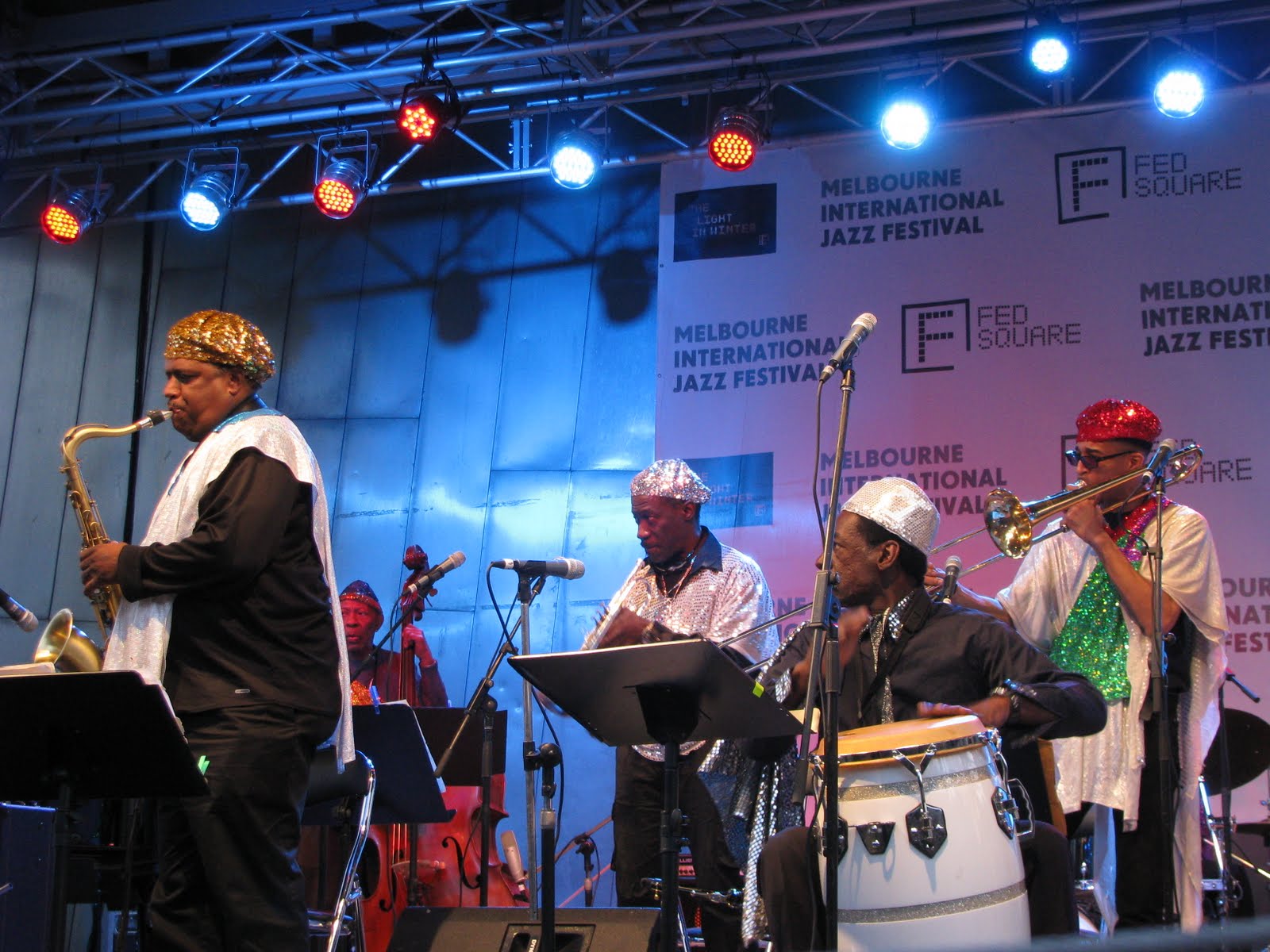
The Sun Ra Arkestra @Fed Square (Melbourne) earlier today


(Click to enlarge)
Photos:TimN
We travel the spaceways...
Don't forget for all your intergalactic needs -
visit .Adventure Equation. 

The Outer Worlds of Sun Ra

Download
(BIG thanx John!)

Incoming...


Beaming messages from Saturn... Marshall Allen at the Sun Ra Arkestra gig @Fed Square this afternoon.
More soon...
Photo:TimN
(Click to enlarge)

مســيرة حاشـدة في صعــدة وفــاء للتعــز 03 06 2011‬‎ Yemen


Uninstalling dictator ... 5% complete █░░░░░░░░░░░░░░░░░░░░░░░░░░░░░░░░░░░░

An embarrassment to the beautiful game

Hetherington Doctrine

Photojournalist Tim Hetherington works a rally in Benghazi, Libya, on March 25, 2011. By Finbarr O’Reilly/Reuters
Last week at the First Presbyterian Church of New York my friends and colleagues and I said good-bye to photographer Tim Hetherington, who was killed in combat in Misrata, Libya, a month earlier. My wife and I sat behind Tim’s parents and siblings and watched their shoulders shudder with quiet sobs as people spoke. Tim grew up in England and the family had flown over for the service. Behind us were three journalists who had been in Misrata and miraculously survived the mortar that had landed in their midst killing not only Tim but an American photographer named Chris Hondros and several Libyan rebels. Across the aisle was Idil, Tim’s girlfriend of one year whose parents had emigrated from Somalia.
Tim had been schooled by Jesuits and perhaps as a result had gone through his life profoundly unreligious, so the service was secular. Following a rendition of Schubert’s heartbreaking Trio #2 in E Flat, two reggae musicians played Bob Marley’s “Redemption Song” and “One Love” between eulogies. I watched the pastor’s eyebrow arch in concern and then appreciation as Marley’s message of human understanding filled the church. Finally four American vets stood up, men from Battle Company of the 173rd Airborne who had been under fire with Tim and me many times in eastern Afghanistan. They filed out of their pew carrying two folded American flags that had been sent by Senator John McCain, himself a veteran of Vietnam. The young men presented my country’s flag to the Hetherington family and then to Idil.
I missed most of that beautiful moment because I was crying too hard, but later I did savor one comforting thought: this may be one of the few countries in the world where a senator would see fit to present the national flag to a woman of Somali origin in honor of an Englishman killed in Libya. Whatever criticisms one might level at our county, we are sometimes capable of including the entire world in our embrace. In the midst of our painful debate about immigration, about war, and about our responsibility to other countries, it is an important thing to remember. It was perhaps one of the reasons that Tim had moved here—to escape what he felt to be the stultifying atmosphere of London.
Tim was 40 years old when he died and had devoted most of his professional life to documenting the human cost of war. On April 20, in a bombed-out section of Misrata, a single mortar shell made him part of the cost. He was hit in the groin with shrapnel and bled out in the back of a pickup truck while a photojournalist he had just met held his hand and tried to keep him awake. Hours earlier, amidst fierce shelling by Qaddafi forces, Tim had sent what was to be his last message on Twitter: In besieged Libyan city of Misurata. Indiscriminate shelling by Qaddafi forces. No sign of NATO...
 Continue reading
Sebastian Junger @'Vanity Fair'

UN: Disconnecting File-Sharers Breaches Human Rights 

(PDF)

Hard-Core Online Drug Bazaar Thumbs its Nose at The Law

It was inevitable, really. We buy so many goods online, and we’ve become so used to sites like Amazon, always ready to sell us what we need at a microsecond’s notice. People of a certain inclination may have already nosed around enough to know that products like high-end marijuana seeds, starter kits for psychedelic mushrooms, and endless amounts of drug growing and drug taking paraphernalia are available in a broad but furtive gray market, where giving out a credit card has to be counted as either an act of great faith or of great desperation. But Silk Road has an answer. Silk Road, a website that bills itself as an “anonymous marketplace," is pioneering a brazen trade in illegal drugs by using sophisticated cryptographic software to protect its customers.
Let’s say you want to sell drugs on the Internet. Not black-market prescription drugs, but illegal drugs, all kinds, all sizes. A digital dream market, where a portion of the day’s specials on sale might read like: “A gram of Afghani hash; 1/8 ounce of “sour 13″ weed; 14 grams of ecstasy; .1 gram tar heroin.” An Internet drugstore this wide open must be either a DEA sting or the dumbest idea in web history, you say to yourself. But maybe not. An investigation by Gawker found enough satisfied customers to give us pause. The site uses a reputation-based rating system for keeping track of seller performance, a setup familiar to anyone who has made purchases on Amazon or eBay. One customer wrote of his purchase of psychedelic drugs: “Excellent quality, packing and communication. Arrived exactly as described.” Five stars for that one. "It's Amazon," wrote Adrian Chen at Gawker, "if Amazon sold mind-altering chemicals."
Well, how do they get away with it? For now, they seem to be getting away with it using the same digital cryptographic tools that enabled the great digital music download era. An encryption algorithm disguises users, courtesy of the anonymous network TOR. Buyers then use a proprietary form of money—Bitcoins—made possible by the same technology that brought us the peer-to-peer file sharing protocol known as Bittorrent. Bitcoins are a form of peer-to-peer money which can be purchased with regular money at other obscure sites, and then deposited in an account at Silk Road as cyber-currency.
So, to recap: The DEA probably can’t ID Silk Road purchasers, due to the TOR anonymizer, and they can’t follow the money because there isn’t any. Gawker managed to communicate with the Silk Road overlords, who wrote back: “Stop funding the state with your tax dollars and direct your productive energies into the black market.” Which gives us a pretty good idea where they stand, politically. Libertarian anarchists, rejoice! This site’s for you.
Dirk Henson @'The Fix'

Bitcoin, Silk Road, and LulzSec oh my!

LulzSec versus FBI

Jewish activists call circumcision ban superhero anti-Semitic